
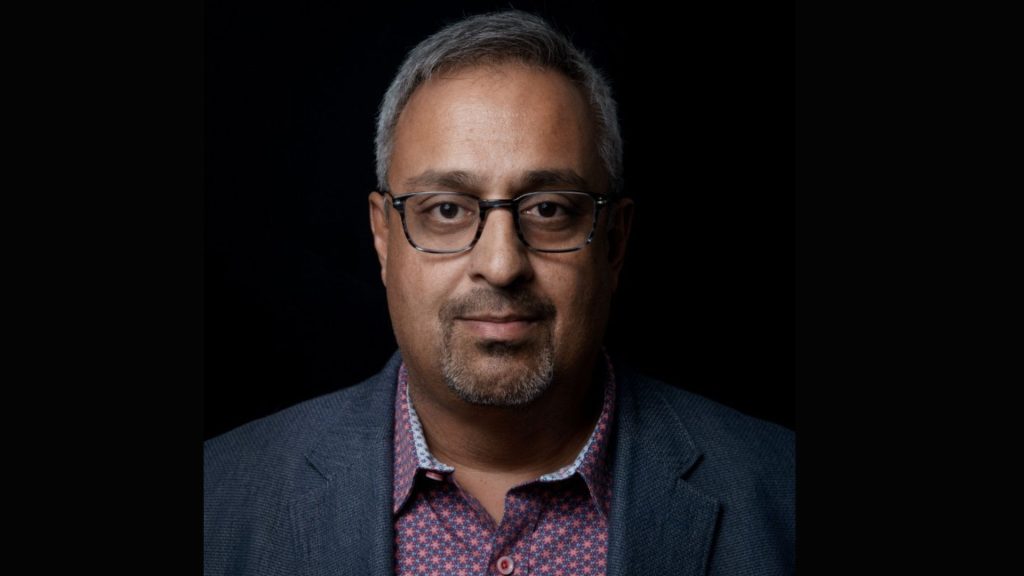

This interview explores the evolution of technology law, patent disputes, and data regulation in an era defined by artificial intelligence and rapid digital innovation. Mr. Neel Chatterjee, an internationally recognized technology litigator and Co-Head of Intellectual Property Litigation at King and Spalding, brings over three decades of experience handling high-stakes matters for global tech companies and emerging startups. Known for shaping legal frameworks in emerging areas of law, he shares insights on data, IP, ethics, and the future of technology and innovation governance.
This interview has been published by Anshi Mudgal and The SuperLawyer Team
Sir, we’ll start with a very basic question. I would like to ask not only about your journey in the global technology leadership space but also about the unique legal or strategic challenges you have encountered while handling litigation for major multinational companies whose innovations are transforming markets and impacting society at large. Please do tell us about your journey.
One of the things when you’re dealing with new technologies or uncertain areas of law is sometimes the judges are a lot older than the people who might be using the technologies for the first time. I’ll give an example, when we all watch television now and have a smart tv, in many ways the TV is watching you and you’re not watching the TV because it’s trying to determine what advertisements to give you. And when you go to a judge, a senior lawyer or a judge who’s very, very experienced, they encounter these issues with a certain feeling of creepiness.

They may not like it, they may not feel comfortable with it because it isn’t what they’re used to. It feels strange to have someone else watching you and learning from you or things like that. And when you’re dealing with these complex technologies, especially when areas of law are undefined, you have to figure out how to make the technology more accessible and more commonplace, and to build a narrative around the business that will make it be more palatable for companies. A good example would be in the late 1990s, eBay formed, and eBay, as you know, is a website where people can buy and sell things, but no one knew what the internet rules were back then and many people were selling all kinds of things. They were selling pictures of celebrities. They were selling pirated items. They were selling. I saw someone that said they had a corn flake that looked like it had a picture of Mother Teresa on it. All of these crazy things and people were even trying to sell their votes and elections. There were graduate students who were trying to sell nuclear guidance systems and you don’t want all the good uses of the technology to be shut down at the expense of the irresponsible uses. And so, developing a narrative that made that business model defensible, doing the best you can, working with all the stakeholders who might have an interest, putting guidelines on your website was very important to deal with kind of the creepiness of the bad facts that could come up.
Because those are kind of one-off things compared to the millions of positive applications.
The points you raised can feel daunting for anyone unfamiliar with technology, yet you’ve built a remarkable career as a patent litigator in this very space. From your early clerkship to leading one of the top IP litigation practices, how have you seen the understanding of technology evolve among courts, companies, and lawyers? How did you navigate these shifts to shape a leading technology-driven practice?
The key is don’t be afraid of change. Change creates opportunity. When I first started practicing law, the internet had just started and no one knew what the rules were around the internet, and no one knew what you could or could not do, how copyright content online this is before Napster or anything like that. And getting excited about the facts that the rules are not written and we get to be the social engineers that can help courts write those rules. And then several years later, we have the smartphone revolution, right? Where all of a sudden we’re carrying computers in our hands.
We have social media developed and then we start seeing cars, where cars are now being computers on wheels and you have crypto developing, and you have mobility, like Wi-Fi didn’t really exist when I started practicing law. Or in today’s world, generative AI and AI technologies. And embracing those issues, being willing to experiment with them, not only in how you can practice law better, but also talking about all the positive aspects for society.
And one of the great things when you’re doing high stakes litigation is, I get the best experts in the world as my teachers. If I don’t understand something, the judge isn’t going to understand it. And I’m always able to find great, great teachers. If I don’t think they’re great teachers then I don’t have to hire them as experts on cases.
You mentioned being social engineers, sir, and social engineering is understood differently across cultures. How have you seen it influence intellectual property, especially as innovation constantly reshapes society? From a psychological rather than purely technological perspective, how has this evolution impacted litigators, clients, and global companies adapting to such change?
There’s a lot of answers to that question.
If we start with the issue of patent law. So, when I first started practicing patent law, there was this famous case in the United States called State Street Bank, which basically said, business methods are patentable. And that created a massive amount of patents where people would do routine or ordinary things, but then just write the word internet or put a computer that does this thing and they’d get patents over it. And then they would ask for these exorbitant sums that were way beyond the value of whatever it is the person claimed they invented. And what happened was over time the courts started saying, just because you’re taking a routine thing that you can do manually, and now you’re doing it on a computer isn’t really inventive.
And they started pairing back those patents and saying, those aren’t really allowed. They said we need some better guidelines on how to apportion what the right damage amount is, if someone’s infringing. And maybe not in every instance should there be an injunction. And really it was driven heavily by the proliferation of patents that in some cases we’re not great patents.
Now when you’re doing this social engineering, it’s not a linear path. Not everything is right. Not everything gets better. Sometimes you take detours and you go in different directions and the law gets confusing and it gets hard and you get inconsistent principles, but somehow it finds its way through, right? Another example would be internet law. When the internet law started, there wasn’t an internet and how could we engage in commerce online? How could companies like eBay or Facebook, or LinkedIn or at the time MySpace or Orkut were popular in India.
How do all of those work or gig economies? When you have Uber drivers or DoorDash or whatever the services are, all of these things are things that are going to happen in society. Technology is finding a way. And now what we have to do is help work up a pathway of fair legal rules to allow those businesses to flourish while protecting the rights of people along the way.
It’s fascinating to hear how society and technology have evolved together. As legal counsel for many disruptive businesses, you’ve also handled major crises. How do you approach crisis management while ensuring a company’s long-term reputation and strategic goals remain intact?
Well, it’s changed a lot over 30 years because 30 years ago in 95% of the cases, the answer was we don’t comment on pending litigation. The courts are going to figure it out. We disagree with their allegations and that’s it. No public commentary. Everything that’s being said is being said in court filings. In today’s world, with social media the way it is, with news the way it is, with Reddit or places like that the way they are on information proliferation, there is a far bigger need to make certain kinds of public statements. And when you’re dealing with crisis communications, you have to make assessments fairly quickly as to what predominates: is the public commentary really the driver for the business, or is the litigation strategy the driver for the business? Is there a place in the middle ground where you can advance both of them?
The thing I’m always vigilant on is I very frequently will get a crisis communications consultant involved. Well, I’ll want a point person for the client if it’s a small company, it might just be the founder. If it’s a bigger organization, they might have their own communications team and then the legal team.
And we generally will come up with a fairly aggressive strategy over what’s the three-hour response, the six-hour response, the twelve-hour response, and so on and so forth. And what are the benchmarks we have to give quick but accurate answers that are very succinct and that are digestible for people.
And it is okay at times to say, we don’t know yet. We are concerned about this, but we are investigating and we will give it a report as we learn more. And I’m actually going to be teaching a class on this issue in just about three weeks. But really having the team assembled and knowing who they are ahead of time.
Can really help because having people have a relationship with each other and already know each other’s communication styles matters. Because some of the stakeholders will sometimes want to take more aggressive positions than maybe are the right strategy in the larger scheme of things.
Sir, you have founded the Bay Area Diversity Career Fair, what prompted you to do that? Because it has become a cornerstone for diverse law students. And the kind of platform that you have built, how do you assess its role in actually shaping the future of not only diversity, but also inclusion in the legal profession, which is rare to see?
Yeah, so inclusion and diversity is improving in the legal profession. And I can’t speak for my law firm, so I’m only going to speak for myself on all of this, obviously, but I founded the Bay Area Diversity Career Fair 25 years ago, largely because I got my first job through a diversity career fair that was in Atlanta, Georgia, roughly, I don’t know, 35, 40 years ago. 35 years ago, probably. And I’m not sure I would’ve been able to get the jobs that I did without that first opportunity. The two judges I worked for were both women judges and they entered the practice of law at a time when only about 5% of the lawyers in the country were women.
And I was always mindful of how challenging it was for them to become so successful and how important their sponsorship of me was to advance it. So when I founded the Bay Area Diversity Career Fair, the goal was really to create a premier event for law firms to hire second year law students, to have them have an excellent experience where they felt like they could see candidates that were diverse and also would exceed their wildest expectations in terms of quality.
And it became wildly, wildly successful. Another important part of it was at the very beginning when we did it, we would do an opening reception in a law firm’s offices. And that really mattered because for a lot of diverse lawyers, particularly first generation lawyers whose parents maybe didn’t even go to college, they had never set foot inside of a law firm and they had never really met law firm partners in a social environment and I figured out that it was really important for them not to be afraid to find these places accessible and welcoming to them. Now, in today’s world, post pandemic, you know, post Zoom, these activities happen a lot more online, and I kind of greet it with a little bit of happiness and a lot of sadness because I think these important soft issues of introducing people to law firms and law firm environments is still a really important thing for these kids that haven’t been exposed to it before.
The environment and physical environment both have changed drastically after COVID, and for better or worse, no one knows. But the way you have helped with all these inputs to the world, especially this kind of career fair. I really do hope that that kind of thing also happens in India because the same kind of scare is here as well. It’s not easy to reach out to seniors, reach out to senior partners or the law firms in the very start of your career. So, it becomes a little difficult for learners over here as well.
One of the things about the career fair is when we started it and for, I want to say almost 20 years, we would have a career panel for really successful senior lawyers and judges at 8:00 AM in the morning on a Saturday.
That’s a tough time to get an audience and it’s a tough time to ask people to go, and I have to say every single diverse person I ever asked to be on that panel. Always said yes, and that was very, very meaningful. You have some senior federal judge who’s very, very accomplished. Can you please wake up and be here at 8:00 AM to talk to these law students?
You know, that’s their day off. They don’t have to do that. And they would always say yes, and they would be inspired by it.
It’s truly inspiring to hear about this, sir, and I’m sure it will motivate many learners as well. Coming back to IP disputes, how have they evolved over time, especially regarding patents, trade secrets, and online liabilities in today’s internet and generative AI era? In your view, what areas pose the greatest challenges for practitioners, courts, and companies navigating these issues?
It’s kind of an IP answer and kind of not an IP answer. I think the greatest challenge right now is around data. When I went to law school, you could not take a class on patent law in every law school in the country. You couldn’t take it in my law school. But within two or three years of me graduating, I want to say probably 20% of my graduating class is doing intellectual property work of various kinds, and most of us didn’t envision being patent lawyers or patent litigators or trade secrets litigators. Today it is very hard to take a class on the legal topology of data. Data is not something that can be protected by patents.
It can’t be protected by copyrights. It can kind of be protected by trade secrets sometimes. But there’s a whole regulatory component that falls under it. There’s a consumer rights component, and then there’s a business monetization component, that all of those pieces have a legal interest in these data’s and how that data used and how it’s commercialized and how it could be misused or stolen, or hacked.
And very few people, if you go to law school, you take a class on property or on criminal law or on contracts, you cannot take a class today in almost any law school I know of other than one I teach that deals with the legal framework for data. And data is the single largest asset in the world today, and it’s kind of amazing to think that even though it’s the single largest asset.
We have not developed a socially engineered legal framework for it.
It’s often said that data is the new oil. Given the lack of a clear legal framework around data, do you see this becoming a major liability for companies, lawyers, and individuals alike? How do you think law can help address this challenge and ensure data is protected and used responsibly for the benefit of society?
Well, I think other than maybe certain kinds of corporate practices, the data practices in law firms. That could be a market for us to figure this answer out. The data practices in law firms, sometimes they call it cyber, they call it many different things, are the fastest growing practices in law firms today, globally. And everyone defines it differently.
Everyone kind of manages it differently and it’s also one of these things that there are now not only legal jobs around data, but there’s kind of legal adjacent jobs around it, like information security officers or revenue officers who are around monetization of data and things like that.
Sir, why I ask this is because people started doing AI audits and every kind of thing, but no one has heard about data audit, and the way you have said that is going to be the next big thing. Like Peyton became one of the biggest things.
Right, but the automobile industry is a certain size, right?
The oil and gas industry is infinitely larger. So, all these generative AI companies and AI companies are doing great things, but they cannot do it without the gas and the oil.
Absolutely true, sir. When it comes to patents, how do you see the legal and business community adapting to rapid technological innovation, especially with no uniform international standards? Do you think there should be a global framework for patents to bring more consistency across jurisdictions?
Well, you see some harmonization going on in Europe through the UPC, this unified patent court, that is getting some traction.
But I’m not sure you’re ever going to see a uniform treatment globally, unless we have internet interplanetary, patent disputes or something. I just read that they’ve seen evidence that there was life on Mars. Maybe they had patent laws. I don’t know. But I think because patents are a creature of different countries’ national interests. In the US it’s in the United States Constitution that people can get patents. It’s considered so fundamental to national identity. You’ll only be able to go so far as patent harmonization. In the United States, we have jury trials, and in India you do not. Patent cases are often resolved through interim injunctions in India, in the United States, it’s very difficult to get those.
But we have a faster time to trial. And so these differences on how the systems work make it much more challenging to kind of have a harmonized approach.
True, sir, a uniform framework would certainly help new entrants. With the immense responsibilities of high-profile litigation, how do you balance personal and professional life while maintaining mental well-being? Over the years, how have you managed this, and what role does the “Maximum Awesomeness Practice Group” play in guiding young lawyers toward a healthy work-life balance?
So when you want to do high stakes litigation, and if you want to have a busy private practice, you have to understand that compromises are made and you have to have family and spouses and maybe parents who are all signed up for this common mission and, you know, I have a very good relationship with my children and it’s because every time I had free time, I was going to go and do something with them, even if it was at two o’clock on a Tuesday afternoon.
But there are also going to be plenty of things that I missed. There were times I was at the school baseball game when there were no other parents there. And the mental health piece, I kind of equate it to being a doctor in an emergency room. Doctors in the emergency room, if you went into the emergency room and all of a sudden, they were terrified and they said, wow, I’ve never seen that before.
That makes me really nervous. You probably wouldn’t like going into that emergency room very much, but not every doctor wants to be an emergency room doctor, and I am kind of an emergency room doctor for law. Really, I thrive off the pressure. I don’t get stressed out about it, and I actually am more stressed when I’m not busy than when I am.
I think it’s very important, at least for me personally, to have a sense of purpose in what I’m doing. Like I really believe that I’m changing the world one lawsuit at a time. And in addition to the high-profile litigation I do, I maintain an active pro bono practice where I’m doing some very, very important cases for free.
And if I didn’t do all the stuff that people pay me money for, I couldn’t also do those things. You know, I couldn’t find the Diversity Career Fair. I couldn’t do all these other things that have important social good to them. And it makes me very proud that my family and we all kind of rally around it.
There’s a very large legal nonprofit here in Silicon Valley that I go to. I was on the board for 23 years, and I go to the event and I bring my daughter who’s 21, and everyone sees her and they’re like, oh, we’ve seen you grow up coming to these things, and she just blends right in with everybody else.
But, you know, kind of completely separating church and state or family and work. For me personally, that has not worked very well. It is better when it’s all together. And we’re all rooting for each other along the way.
Get in touch with Neel Chatterjee –