
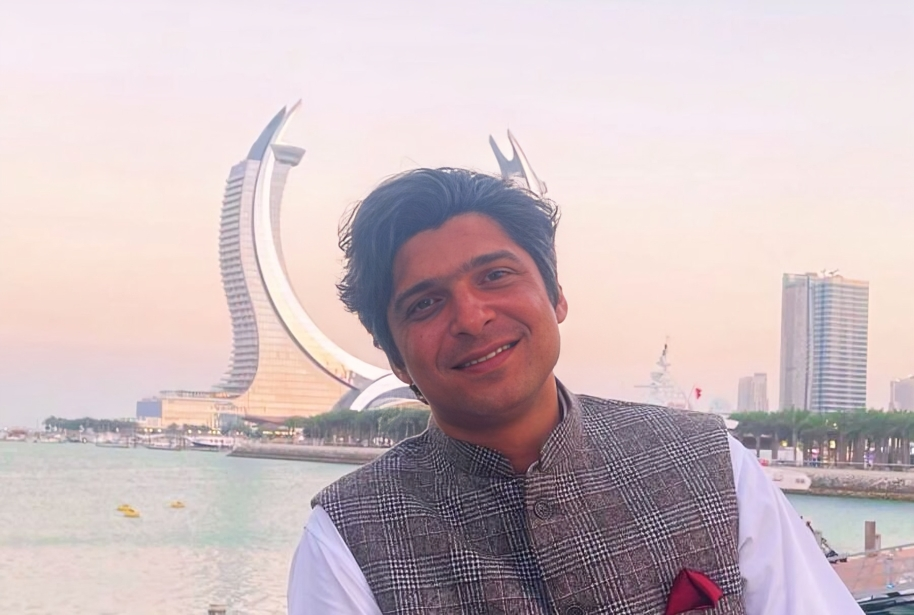

Aamir Khan Wali represents a new generation of globally oriented legal practitioners, with a career spanning Indian Courts, Global Law Firms, and high-stake international arbitration cases that has shaped his philosophy of precision and disciplined advocacy. As the legal profession transforms under globalization, technology, shifting geopolitics and cross-border disputes, lawyers who pair legal expertise with culture, negotiation skills and strategic thinking are redefining how justice is practiced. This interview highlights his defining career moments, landmark experiences, and practical insights for aspiring lawyers seeking careers with global relevance and impact.
This interview has been published by Anshi Mudgal and The SuperLawyer Team
When did the idea of studying law first take shape for you?
To be perfectly honest, law was my accidental destiny. During school, I was busy chasing the spotlight, studying acting at the National School of Dramatics, convinced my future was on the stage. I saw law as the antithesis of creativity, all black robes and no flair. The transformation began in the quiet halls of a library, not a courtroom, during a Law and Literature class. Reading The Merchant of Venice was my pivotal scene; it wasn’t just about Shylock’s pound of flesh, but the raw, human drama of justice, mercy, and the terrifying power of a legal bond. This sparked a fascination with the ancient, dramatic roots of law from Hammurabi to the Roman jurists and I realized the most compelling scripts weren’t in theatres, but in statute books and legal codes. The law, I discovered, was the ultimate stage for human conflict and resolution.
What early experiences helped build your foundation at leading firms?
My time at firms like Fox Mandal and AZB was less about learning the law and more about learning the craft. Good research is the skeleton of any argument, but the senior advocates I worked with taught me how to give it muscle and soul. They showed me that a legal strategy is a living thing, it needs to breathe, adapt, and strike with precision. I learned that the most formidable weapon in a lawyer’s arsenal isn’t just precedent, but the ability to tell a compelling story that resonates with a judge’s humanity. They instilled in me a discipline I carry to this day: the obsessive, almost artistic, pursuit of a watertight case.

What was the turning point that led you to start your own chambers?
The turning point was a slow-burning disillusionment with the factory-like model of traditional law firms. I grew weary of the rigid hierarchies, the gatekeeping of knowledge, and the relentless focus on profit-per-partner that often overshadowed the client’s actual problem. I saw brilliant legal minds reduced to billing machines, and clients treated as files, not people with profound stakes in the outcome. It felt like we were selling a product, not providing a service. That frustration crystallized into a purpose: to build a practice that was a sanctuary from that soullessness.
The Chambers of Amir Khan Wali was born from a desire to give clients direct access to strategic, bespoke counsel, free from the bureaucratic bloat that so often dilutes excellence.
How would you describe your evolution as a lawyer?
My evolution has been a journey from mastering the microscope to navigating the map. Early on, you are trained to focus intensely on a single legal issue, to know one tree with immense depth. With experience, your vision expands. You start to see the entire forest: the interconnected ecosystems of multi-jurisdictional regulations, the geopolitical climates that affect cross-border enforcement, and the commercial realities that underpin every dispute. My practice today is less about isolated legal arguments and more about architecting holistic strategies.
It’s a scientific process of diagnosing the core ailment, a logical mapping of all possible jurisdictional pathways, and a reasonable assessment of the commercial endgame, whether in Mumbai, Singapore, or Doha.
What inspired you to start your own practice after working with international firms?
I was inspired by the stark realization that most law firms are designed to be hotels, excellent at providing standardized rooms for a night. I wanted to build a home.
The enriching experience at large firms such as Sultan Al Abdulla in Doha gave me the technical blueprint, but it also showed me the void it left. Clients don’t need a team of 20 associates where only two do the thinking; they need a singular, obsessive focus on their problem.
My Chamber is the antithesis of the legal factory. We are a small, agile unit built for deployment, not deliberation and offer precision, not process. We are the special forces of the legal world, while most firms operate as the standing army.
What challenges have you encountered in cross-border arbitration?
The greatest challenge is navigating the invisible cultural and emotional fault lines beneath the legal arguments. In the Swiss Timing arbitration, representing a government official, the case wasn’t just about corruption statutes; it was about managing the profound reputational terror of a nation.
In the Panna-Mukta-Tapti oil fields arbitration, co-counseling with Allen & Overy, the challenge was harmonizing a UK-style aggressive advocacy with the more nuanced, relationship-preserving approach expected by Indian public sector clients.
You are not just a lawyer; you are a diplomat, a cultural translator, and a psychologist, all while ensuring a billion-dollar award doesn’t unravel on a procedural technicality.
Is there one case that stands out and shaped your approach?
Well, there are many. But working with the legendary Sr. Adv. Percival Billimoria on a fundamental rights petition for a Parsi child was a masterclass in legal humanity. The case was, on paper, about the entitlement to a sports club.
In reality, it was about the soul of a community and the innocence of a child caught in the crossfire of his parents’ divorce. Mr. Billimoria’s strategy was breathtakingly detailed; he didn’t just attack the legal issue, he built a fortress around the child’s dignity. We left no sociological, historical, or emotional stone unturned. That case taught me that true legal strategy is a deep, empathetic immersion into the client’s world. You don’t just win the case; you win back their life.
What key trends are emerging in cross-border disputes?
We are witnessing a tectonic shift. The energy transition is sparking a new generation of “green disputes” contracts for fossil fuel projects are being torn up, leading to massive arbitration claims under Investment Treaties.
My early work with the National Green Tribunal and launching the first international environmental law journal under Justice Swatanter Kumar (Retd.) positioned me at the forefront of this.
Simultaneously, the digital infrastructure boom, powered by AI and data, is creating a wild west of regulatory conflicts. My forthcoming book, Beyond Headlines, argues for specialized media tribunals to handle the coming deluge of complex, tech-driven legal battles. The future of law is not just in oil and gas, but in algorithms and carbon credits.
What practical advice would you share with young advocates?
My most practical, and perhaps unpopular, advice is to stay ruthlessly sober, both in mind and habit. This profession is a marathon of the intellect, and substances such as alcohol and drugs often act as a sedative for ambition in our profession. Be an early riser, because the quiet hours of the morning are when the best strategies are born.
Pick up a sport that you like, it really helps attain clarity of thought and if that’s not your jam – pray, meditate, and do breath work when you can. Have the confidence to be bold in courtrooms and the humility to ask for help, it’s a sign of strength, not weakness.
And finally, find your tribe. This is why I built The Armoury, a global community for solo practitioners, industry experts and mentors. Join us, it’s free of cost and contribute to platforms like our newsletter, The Dispatch, and learn that while the law is a solitary practice, you don’t have to practice it alone. Visibility and success come from the connections you cultivate.
Get in touch with Aamir Khan Wali –



Hiring Aamir was the best decision I made for this business. He has this rare gift for cutting through the noise and telling you the hard truth you need to hear, but in a way that makes you feel empowered, not defeated. He’s more than an advisor. He’s a strategic partner.