
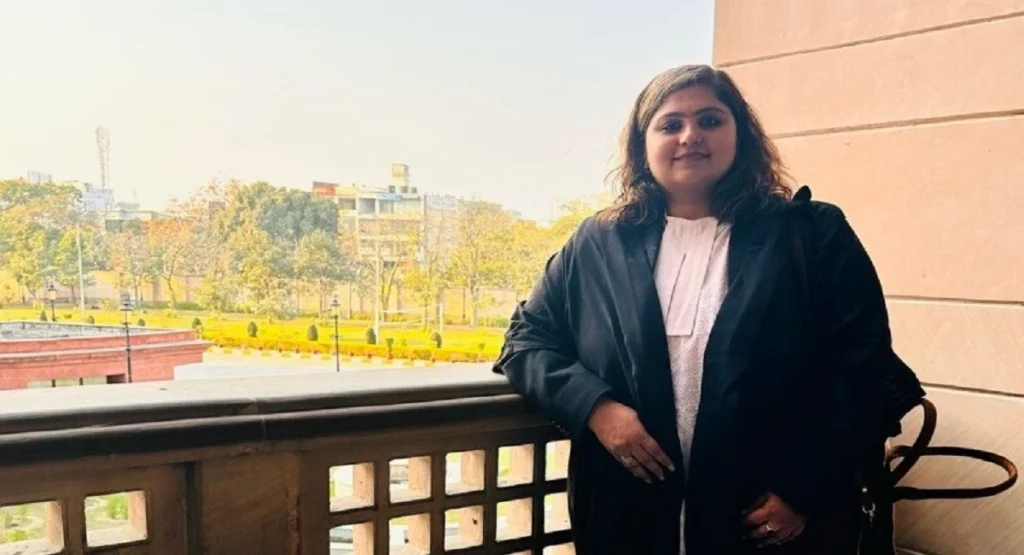

Rooted in conviction rather than legacy, this interview traces the inspiring journey of Varsha Singh, Founder and Lead Counsel at Lexvent Partners, who chose law not as a career option, but as a lifelong calling. From a background in management studies to pursuing both LLB and LLM from Campus Law Centre, Delhi University, she reflects on the early motivations that shaped her path and the courage it took to step into independent practice. Through stories of her challenging criminal and constitutional cases, and mentoring aspiring judges, the conversation offers a deeply personal insight into what it truly means to stand for justice, empathy, and substance in the legal profession.
This interview has been published by Anshi Mudgal and The SuperLawyer Team
Maam, before establishing yourself as an independent counsel, what were some of the early instances that motivated you to pursue law?
I was earlier a management student by background. After my graduation, I did a PGDM and honestly, I had no family legacy in law. As I said, no inherited chamber, no legal surname, and no readymade network. But one thing remained constant. I had an unshakeable thought since very early childhood that law would be my everything one day, even when I did not even know what law actually was. I did not understand what the Constitution was. I was a management student and I never knew how courtrooms looked. I was always driven by the idea of justice.

I was not aware of how I would achieve it, but I grew up observing people around me who often suffered, not because they were wrong, but because they were unaware of justice and unaware of their rights.
At that time, I thought of pursuing an MBA, because when people complete their graduation, that is what they generally think of. That was the largest thought churning in my mind.
So I thought of doing law. I had not even taken admission anywhere else. I was clear that I would only do law from Delhi University. That was the only thought I had, that one day I would go to Campus Law Centre and pursue law. That was the only thought in my mind in the year 2010.
I appeared for the entrance examination, and by God’s grace, I cleared it in my very first attempt at Campus Law Centre. I took admission there, and while I was pursuing law, the same thought continued to guide me.
I then completed my LLB from Campus Law Centre and later my LLM from Campus Law Centre as well. Since childhood, my mother used to say that when I was four or five years old, I would always say that one day I would become a lawyer.
That thought also stayed in my mother’s mind. When I completed my MBA, she would often say to me, why do you not go and do law?
It was also my father’s dream. I lost my father when I was four years old, so it was his dream as well.
I was very clear that if I ever chose law, I would do it only from Campus Law Centre. That was the only thought I carried. It has been an amazing and inspiring journey, especially because many people aspire to this path but are not able to complete it. While everyone around me saw management as a safe path, I saw law as my calling. I was working in career coaching in Allahabad, so management was a safe option for me. But even at that time, I saw law as my calling.
It was not a career choice. It was a hundred percent conviction. I knew because I had only one thought in my mind. I knew that one day I wanted to stand in court, not just to argue, but to make someone believe that truth still has a voice.
That inner fire, born out of a sense of fairness and empathy, is what brought me into law. Even today, that same conviction drives every case I take, every student I mentor, and every initiative I lead. That is the only thought I carry.
I would like to really ask you what were the initial experiences after you completed your law, that laid foundation to your practice and helped you in every role building your journey?
If I look back, Anshi, every stage of my career became a stepping stone, from my days as a law student at Campus Law Centre to assisting my seniors and coaching students. I learned that law rewards those who are patient, consistent, and disciplined.
When I was pursuing law, I had only one thought. I prepared seriously for the judicial service examination. The judicial service examination curriculum is hundred percent exhaustive. I wrote more than sixteen mains and six interviews, and I gave my hundred percent.
Alongside this, I was also engaged in practice. I worked under my senior, who is now practising in the Supreme Court. That phase taught me that law is the only profession that can truly make you passionate, because you want to change someone’s life, and your decisions can directly impact someone’s life, especially in the judiciary.
During that time, I developed strong drafting skills. Whenever I drafted well, my senior would always appreciate my work. Those moments stayed with me. I also learned immensely from the seniors I worked with. They taught me humility, respect for the process, and the true value of preparation. They emphasised how important it is to prepare your case thoroughly, to be clear on every fact, and to be well versed with judgments.
All of this helped me in my early court practice. It also played a significant role in shaping my journey and building the foundation of who I am today.
I would really like to ask you what was that one turning point in your career? That inspired you to embrace your own potential and step into independent practice, because everyone has that one point?
There comes a moment in everybody’s life when a person realises that growth demands courage. Growth always demands courage, the courage to stand alone, to argue your own case, and to take responsibility for every word you say in court. This is very important. I had immense respect for my mentors, but I also knew that one day I had to carve my own identity.
That leap of faith from assisting to leading was my turning point. I had always been assisting, and now I wanted to lead. I realised this on the first day I argued independently. I felt fear, definitely, but I also felt freedom. The freedom to take my own decisions, to present my own points, and to obtain relief from the court. That freedom becomes addictive.
It is very important. Judges are very cooperative because the best legal minds should come before the court, and that encouragement adds to the confidence. That freedom, once experienced, becomes addictive. Absolutely, ma’am. Even the younger generation today has many opportunities, and the judiciary also supports them in many ways.
Now coming to the next part, after you established your chamber, of course it would not have been easy. There would have been initial struggles or setbacks. What would you say was the first breakthrough in your practice that gave you confidence?
I was a full time expert in judicial service examination preparation. When I started my own practice, I began in Delhi, and now I am practising in Lakhimpur Kheri while also handling cases in Delhi.
I had more dreams than resources because I come from a very humble background, where there were no godfathers, only grit. My early breakthrough came when I represented a client on a pro bono basis. She said to me, “Madam, I do not have faith in justice.” She was a woman facing domestic violence. That one sentence was worth more than any judgment. Soon after, I decided to take up her matter fully. For me, it went beyond money.
That early experience gave me confidence and shaped my vision. I realised that sincerity, honest representation, and respect for the profession truly matter. Those moments validated my belief that honesty, preparation, and empathy can outshine privilege. This is something I always tell people. You have to be honest. You have to be prepared. Once you are honest and prepared, the rest lies in the hands of the judges and on the merit of your case, and even the client understands that.
You have navigated different cases in criminal and constitutional law and various other areas. What has been that one most challenging case that you would say was difficult also, but it gave. A lot to learn, also learn. So what was that one case?
It is very important to mention one of my toughest cases. I cannot name the case. The entire family was wrongly accused. Multiple family members were implicated, and criminal litigation was initiated against them.
The entire dispute was essentially a civil dispute, but it was deliberately given the colour of criminal litigation for the purpose of dealing with property issues. A chargesheet was prepared, even though my client was completely innocent and there was nothing substantial in the case diary. The police report itself lacked evidence and clearly reflected that the alleged incident had not even taken place. It was a false narration, as the FIR had been lodged by a female member of the family.
I had to take the matter before the High Court to challenge the chargesheet. It was a family dispute, and initially, even mediation did not seem possible. However, I undertook multiple mediation efforts between the family members, and finally, we succeeded. It was a very difficult case.
There are certain cases where disputes appear criminal in nature but are actually rooted in civil disagreements. As lawyers, we should always encourage that such disputes be resolved through amicable settlement, preferably through mediation. There are cases which are technically non compoundable, but if both parties agree and the matter originates from a civil dispute, then as lawyers, we should encourage families to settle amicably. What ultimately matters are family values.
Often, people forget this, and the attitude of revenge takes over. As a lawyer, I do not encourage that mindset. I always try to pursue amicable settlement wherever possible.
That particular case was one of my toughest. There are many such cases I could discuss, but what is required in such matters is not only legal skill, but also emotional courage. Emotional courage to stand firm and to give the best and most honest opinion to your client. That case taught me that being a lawyer is not about defending the popular side, but about standing for the right side.
I always call the parties for mediation and ask them to resolve their disputes. That experience reaffirmed my belief that justice often begins with a lonely voice, and I was proud to be that voice.
That is an important learning. Every person, every lawyer, every student, and especially every first generation lawyer faces invisible tests. There are months with no cases, no income, and a lot of self doubt. There are moments when you feel that litigation may not be your path, but every challenge becomes your teacher.
I made it a habit to read every single day. I ensured that I would not sleep without reading. I focused on building networks and staying grounded. These struggles are not signs of failure. Those early struggles taught me that they are chapters of strength, preparing me for bigger battles ahead. The same applies to every student and every first generation lawyer.
Maam, from early beginnings to leading your law firm and mentoring judicial aspirants also, what is your vision for the future, future of your practice and future of yourself?
My vision is to create spaces where young minds, especially those who come from small towns like the one I come from, can dream without fear. I come from a small town where people dream, and I was fortunate to receive the right mentorship.
I am associated with Delhi University Law, where, in my part time role, I mentor students preparing for the judicial service examination. I have been mentoring students for the last eight to ten years.
I always tell students that preparing for the judicial service examination will not stop them. It is not going to limit their growth. Three years of practice is mandatory, and young lawyers can be full time practitioners while also being part time experts in judicial service preparation.
I want to create a strong foundation. The goal is very simple. Every student should know that their background does not define their future. Their effort does.
Our firm is open to taking bright and brilliant minds, especially first generation lawyers. I am a first generation lawyer myself, and if I could do it, anyone can do it.
At last, my advice would be this. Do not be afraid to be first. You do not need a surname in law. You need substance. Read the law as if it is alive, not merely as sections, but as the story of real people. Be patient. Success in law does not come overnight. It comes through countless days of silence, study, and sincerity. And remember, one day your struggle will become someone’s inspiration.
Get in touch with Varsha Singh –