
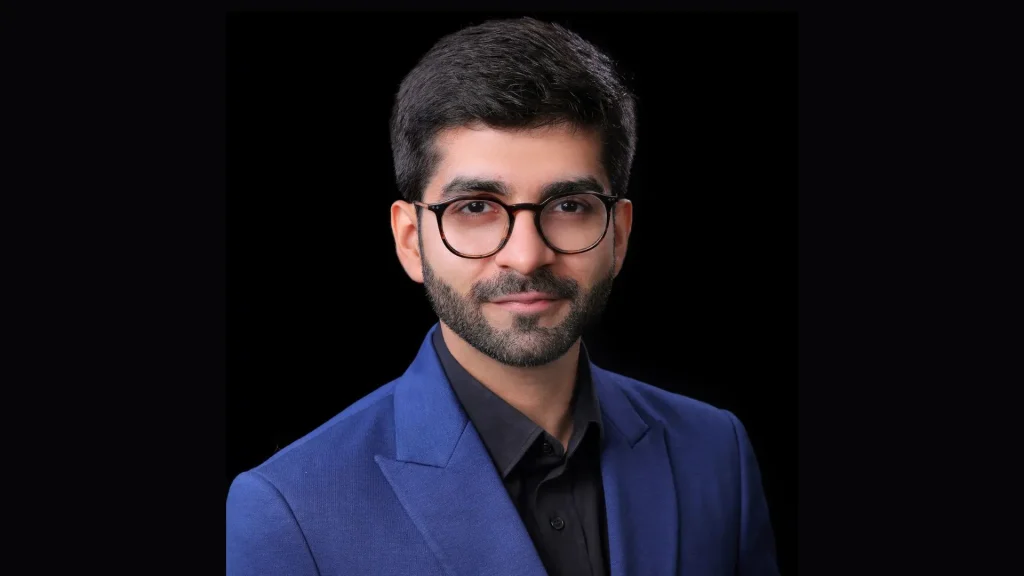

Kashish Aneja, Advocate and Global Health Law expert associated with the O’Neill Institute for National and Global Health Law and Adjunct Professor at Jindal Global Law School, shares his journey from law school to building a niche career in global health law and international policy. With experience across litigation, research, and international policymaking, he reflects on choosing unconventional paths, specialising in a niche field, and working with global institutions. He also shares insights and practical advice for law students and young lawyers looking to build meaningful careers in specialised and international areas of law.
This interview has been published by Anshi Mudgal and The SuperLawyer Team
How and what was the inspiration behind choosing law and then moving ahead and choosing global health law and making your way towards the international community and making a name for yourself and for our country?
To answer that, I would need to go back almost fifteen to seventeen years. My decision to pursue law right after school was shaped by an amalgamation of influences, some deeply personal, others more deliberate.

I am a first-generation lawyer, born into a family of doctors. Growing up, I saw my parents and my brother engage directly with society, addressing people’s problems through medicine. That exposure had a profound impact on me. I realised early on that I, too, wanted a profession that allowed me to engage with real societal issues and contribute meaningfully to solving them. For me, that medium was law. I did not want a profession that confined me to a desk; I wanted one that required understanding social realities and engaging with them directly.
At the same time, I began to reflect on my own interests and skill sets. I completed my schooling at St. Columba’s School, Delhi, where I was actively involved in debating and public speaking both of which I thoroughly enjoyed. I also recognised that I had a strong analytical and logical aptitude. Bringing these elements together, law seemed like a natural fit: a field that allowed me to engage with society, use my analytical skills, and exercise my interest in public speaking.
As a person both then and now I have a fairly dynamic personality. I enjoy working in complex, fast-moving environments and engaging with multiple challenging issues simultaneously. During my 11th and 12th standards, I consciously explored different professional paths. I interacted with lawyers, chartered accountants, and doctors to understand not just the nature of their work but also their lifestyles. After that exploration, law increasingly felt like my calling. That said, I must admit that it was only towards the end of my first year in law school that I became truly confident that I had made the right choice. From that point onward, I felt completely at home.
So, in many ways, my journey into law was partly deliberate, partly intuitive, and partly shaped by luck and faith.
My journey into global health law, however, followed a slightly different trajectory again a combination of conscious choices and circumstance. Coming from a family of doctors, conversations around our dining table throughout my childhood revolved around healthcare: the state of health infrastructure, challenges faced by doctors and hospitals, and issues surrounding access to medicines and healthcare for ordinary people. Over time, I realised that these problems were not unique to India; they existed across the world, irrespective of economic status. That realization stayed with me through my adolescence and throughout law school.
I have always had a problem-solving mindset, and once I identified these systemic issues, I began to look for ways to address them. Law emerged as a powerful tool to engage with these challenges particularly those related to healthcare access and infrastructure.
My internships played a significant role in shaping this direction. I interned with Senior Advocate Indu Malhotra, who later became Justice Indu Malhotra, and also worked with NGOs focusing on public health issues. Throughout law school, I consciously diversified my internships across different fields to gain broad exposure. What became increasingly clear to me was that whenever my work lay at the intersection of law and health, it genuinely interested and inspired me.
Equally important were the mentors I encountered along the way. Justice A.K. Sikri, with whom I clerked and who was effectively my first professional mentor, and Justice Indu Malhotra were both instrumental in shaping my decision to specialise in health law and eventually pursue an LLM in the field. At the time, this was not an obvious or easy decision. This was pre-COVID, when health law was not widely recognised as a distinct or promising specialisation. Many senior lawyers advised me against it, considering it a risky choice.
However, the encouragement I received from both Justice Sikri and Justice Indu Malhotra gave me the confidence to take that risk. My understanding of health law at that stage was admittedly limited much like the broader understanding of the field in India, where health law is often narrowly equated with medical negligence or healthcare regulation. In reality, that represents only a small fragment of the much larger universe of health law and policy.
Much of my deeper understanding of health law developed during my clerkship period through working on cases such as euthanasia, drafting my statements of purpose, and researching institutions aligned with my interests. That phase was crucial in helping me realise that I wanted to pursue global health law in particular, and it ultimately led me to undertake an LLM in that field.
Coming from a family of doctors and realizing early in law school that this was the right path for you, you pursued unique internships and consistently chose niche areas like global health law, which became even more significant after COVID. When you decided to pursue your LLM at the Graduate Institute of International and Development Studies and Georgetown University Law Center, how did your internships, learning, and professional experiences shape your decision and help you plan your path, overcome challenges, and strategically work towards securing admission and building your journey?
I think in anyone’s journey, the starting point has to be self-awareness, understanding who you are, what excites you, and what does not. As I mentioned earlier, I have a fairly dynamic personality. I enjoy working on complex problems, engaging with uncertainty, and operating in evolving spaces. Healthcare was a problem I had identified early on, but equally important was how I wanted to engage with that problem.
As a person, I gravitate towards niche and emerging areas rather than fields that are already well-established or crowded. I enjoy working at the frontiers where questions are still being shaped and solutions are not yet fully formed. That preference continues even today. I consciously take up projects and clients where there is a clear niche or where the issues involved are complex and unresolved.
This inclination became clearer during law school, particularly through my internships. My approach to internships was very deliberate. First, I interned at every possible opportunity I could. Second, I ensured that no two internships were the same. I did not repeat industries, subject matters, or even forums. On the litigation side, I interned across district courts, high courts, and the Supreme Court. I worked with senior advocates, judges, advocates-on-record, in-house legal teams, NGOs, and law firms. It was through this process that I realised, for instance, that law firms were not the right fit for me.
That kind of exposure is invaluable. The more you see, the more clarity you gain about what truly resonates with you and what does not. This approach shaped my law school journey and eventually helped me become certain about my interest in global health law.
Once that clarity emerged, the next major question was where I wanted to pursue my specialisation. Choosing the institution was not easy, but at the same time, within the field of health law, it became relatively straightforward. Health law, especially pre-COVID was an extremely niche specialisation. If you look at institutions globally, Georgetown University Law Center stands out as one of the strongest centres for health law and policy. They offer close to fifty courses in health law and related areas, a breadth and depth that is difficult to find elsewhere. This allows students to genuinely curate their academic experience rather than follow a rigid structure.
Another decisive factor was the O’Neill Institute for National and Global Health Law, which is based at Georgetown. The Institute is a World Health Organization Collaborating Centre for Health Law and Policy, the only specialised collaborating centre in this field globally. That designation, combined with the Institute’s rich history and global engagement, provides unparalleled exposure during the LLM. These factors collectively made Georgetown an obvious choice for me.
I often speak to students who are applying for LLMs, and I am quite firm on one point: you must have a clear “why.” Today, pursuing an LLM abroad has almost become a trend, and many students do not fully reflect on why they want to do it or what they hope to gain from it. You don’t need to have your entire career mapped out, but you do need a sense of direction. An LLM is a significant investment of time, energy, and resources. I was very clear about my “why,” even though I did not know exactly what I would do afterward. At that stage, my intention was always to return to litigation, which had been my first love. Life, of course, had other plans.
I was fortunate to receive an offer of admission and a scholarship from Georgetown, which certainly made the decision easier. I also consciously chose a U.S. institution over a European or Asian one. U.S. universities tend to be more dynamic and practice-oriented, which suits my personality. I thrive in fast-moving, interdisciplinary environments, and that made Georgetown a better fit for me than more traditionally academic institutions, such as those in the UK.
The more difficult decision was opting for a joint LLM between Georgetown University and the Graduate Institute of International and Development Studies in Geneva. Switching countries, institutions, and continents within the span of a single master’s programme is not easy, and very few people choose that path. You have limited time at each institution and are expected to make the most of entirely different academic cultures, infrastructures, and learning styles all while physically relocating and settling into new cities and contexts.
I was uncertain almost until the very end. But a few factors ultimately guided my decision. First, once again, was my comfort with dynamic and complex environments. The structure of the joint programme itself reflected that complexity. Second, I was certain that I wanted a career in global health law, not merely domestic or national health law. Geneva is the hub of international governance, home to the United Nations system and the World Health Organization. Being immersed in that ecosystem was critical to the kind of work I wanted to pursue.
Georgetown and the Graduate Institute offered very different, yet complementary, environments, one deeply embedded in policy and practice, the other at the heart of global diplomacy and international institutions. Together, they aligned perfectly with my long-term interests.
That, in essence, is how my internships, learning, and self-reflection shaped my decisions and why I ultimately chose the path I did in global health law.
You mentioned that your “why” was very clear and that you maintained a dynamic approach by exploring diverse internships and fields instead of following a conventional single-track path. How did you bring together your love for litigation, varied experiences, and dynamic mindset to reach top institutions like Harvard Law School and successfully balance the many facets of your career and learning?
A significant part of my journey is shaped by the fact that I did not come from a National Law School. One unexpected advantage of that was freedom. I was not handed a predefined path or told what I should be doing. I studied at IP University in Delhi, and being in Delhi close to courts, institutions, and opportunities while also not being boxed into a particular narrative allowed me to make my own choices.
That freedom pushed me to think independently. I wanted to carve out my own niche and design my own journey, rather than replicate someone else’s. While there was certainly an element of faith and luck involved, most of my decisions were guided by clearly defined personal principles and a strong internal compass. I was always drawn towards what genuinely interested me and what I was passionate about, and I consciously moved away from things that did not excite me.
I want to acknowledge that this approach comes with a degree of privilege and choice, and I am aware of that. But I also strongly believe that if you are not enjoying what you are doing, it eventually shows both in the quality of your work and in how fulfilled you feel. I followed that belief consistently, and it led me, over time, towards work that I truly enjoy. Today, I can genuinely say that I love what I do on a daily basis.
Throughout law school, this was the mindset I operated with. I did not chase labels or conventional wisdom. Instead, I paid attention to how different experiences made me feel and what kind of work energized me. Equally important was having the right mentors along the way people who did not give me ready-made answers but helped me think more clearly and guided me in the right direction.
Ultimately, bringing together litigation, diverse experiences, and a dynamic mindset was less about balancing competing interests and more about being intentional and mindful with my choices. I wish there were a formula for this, but there really isn’t. For me, it came down to being thoughtful about how I spent my time, staying open to opportunities as they arose, and being honest with myself about what I wanted from my journey.
That openness and mindfulness allowed the different facets of my career and learning to come together organically over time.
As an independent legal consultant working on policymaking across developing and developed countries, particularly in the Asia-Pacific region and with the O’Neill Institute for National and Global Health Law, how do you approach policymaking across different cultural and demographic contexts and balance policies that impact entire nations? What thought process, research, and mindset go into your work, what path should students follow to enter this research and policy field, and how do you see your work ultimately serving society?
That’s a very interesting question, and it really goes to the heart of how policymaking works in the international space.
At a broad level, working in domestic law and working in international policymaking are fundamentally different exercises. I often explain it using an analogy: domestic legal work is relatively micro in nature, whereas international work operates at a macro level much like the distinction between microeconomics and macroeconomics. When you work internationally, your frame of reference has to expand significantly.
In the international policy space, the first requirement is understanding governance itself, how systems function and how decisions are made. You are dealing with a wide range of stakeholders: national governments and multiple ministries within them, health, finance, trade; international organizations such as the United Nations; domestic and international NGOs and civil society organizations; universities and policy think tanks; public–private partnerships; and philanthropic foundations such as the Gates Foundation or Bloomberg Philanthropies. Each of these actors comes with its own priorities, expectations, constraints, and institutional culture.
To work effectively, you need to understand how each of these stakeholders thinks and operates. You need to learn how to speak their respective “languages” and align your work accordingly. A large part of my work involves navigating these intersections and then translating global norms and policy frameworks into domestic legal and regulatory contexts.
That translation process is perhaps the most challenging and the most important part of international policymaking. It requires a deep understanding of domestic realities: a country’s legal principles, institutional capacity, political economy, cultural context, and the specific problems it faces. The world would be far simpler if international policies could simply be copied and pasted into domestic systems across nearly 200 countries but that is not how governance works in practice.
Having worked on drafting policies and legislation across multiple countries, particularly in Asia and parts of Africa, I have learned that context is everything. At the same time, it is equally important to be conscious of one’s own limitations. As an external or international expert, you must know where your expertise ends and when it is necessary to defer to local knowledge. Creating space for domestic experts and stakeholders is not just good practice, it is essential for legitimacy and effectiveness.
This leads to another defining feature of international work: collaboration. The international policy space is far more collaborative than most domestic legal environments. That collaboration can slow processes down, but it also leads to outcomes that are more deliberate, inclusive, and comprehensive whether the goal is drafting a law, shaping a policy, or addressing a systemic problem.
For students and young professionals interested in this kind of research- and policy-oriented work, the most important thing is building strong foundations. Those foundations begin at the domestic level. While it is valuable to learn international law early on, it is equally important to understand your own domestic legal system, governance structures, and socio-political context. Alongside this, one must develop core legal skills research, writing, analysis, and critical thinking which remain indispensable regardless of the forum you work in.
Over time, these elements come together: domestic grounding, international exposure, and a strong skill set. That combination allows you to engage meaningfully with global issues while remaining rooted in local realities.
Finally, coming from a family deeply committed to public service, I see my work particularly in policymaking as an extension of that ethos. The tools may be different from medicine, but the underlying objective is the same: to serve society by addressing structural problems and contributing, in whatever way possible, to systems that improve people’s lives.
During your time at Harvard, your work focused on technology transfer agreements and pandemic agreements for the WHO. What role have you seen intellectual property, artificial intelligence, and emerging technologies play in shaping our daily lives? Given their dynamic nature, how do you see the future of technology transfer not just between universities or researchers, but between countries and how will such policies affect people’s everyday lives? Also, how do you view the role of AI, robotics, and other technologies in transforming healthcare and extending human life today?
You’ve touched on several interconnected themes there, so let me begin by briefly explaining the work I was doing at Harvard, because it directly relates to technology transfer and the broader role of technology in global health law.
Over the last six months at Harvard Law School, I primarily focused on two areas. The first was my core substantive interest: access to medical countermeasures—specifically medicines, vaccines, and other essential health products. My research examined how technology transfer facilitates access to these countermeasures, the legal and regulatory hurdles that exist, and what incentives could enable smoother and more effective technology transfer from high-income countries to low- and middle-income countries. This line of inquiry was closely tied to the pandemic agreement negotiations at the World Health Organization, an area I have been advising on and closely engaging with over the past three years.
Technology transfer emerged as one of the most contentious and central issues in the WHO Pandemic Agreement negotiations. I wanted to explore these questions in much greater depth, which is what I did during my time at Harvard. That work involved extensive doctrinal and policy research, close engagement with faculty, semi-structured interviews across Boston’s vast health and innovation ecosystem including practitioners at law firms advising on technology transfer and delivering lectures and talks both at Harvard and across the United States on these issues.
The second area I focused on was international negotiations. During my LLM, I did not have the opportunity to formally train in negotiation skills, largely because course selection always involves trade-offs. Harvard’s negotiation programmes are among the strongest globally, so I used this time to undertake intensive training, including multiple mock international negotiations many of which were health-focused. That experience was particularly enriching, especially working alongside Harvard JD students. Overall, the last six months offered a strong balance between deepening my technical expertise in pandemic preparedness, access to medical countermeasures, and technology transfer, while also strengthening my soft skills in international negotiations.
More broadly, technology has become inseparable from our daily lives especially in the post-COVID world and healthcare is no exception. The COVID-19 pandemic demonstrated what rapid technological innovation can achieve. Within less than a year, we saw the development and deployment of vaccines, something that would have been unimaginable a decade ago. That experience fundamentally changed how we think about what is possible.
Technology transfer plays a crucial role here. It enables the movement of know-how, expertise, and manufacturing capabilities from high-income countries to lower-income countries, allowing them to produce vaccines and other health products domestically. Today, these ideas are increasingly embedded in both bilateral and multilateral negotiations, with the WHO Pandemic Agreement being a clear example of this evolving approach.
At the same time, artificial intelligence and emerging technologies are reshaping both the legal and healthcare landscapes. AI is already being used extensively in medical research, diagnostics, and even robotic-assisted surgeries. While these developments hold enormous promise, they also raise complex regulatory questions relating to ethics, intellectual property, data protection, and privacy. This is not a simple or linear space; it is a highly interconnected and rapidly evolving ecosystem.
We have seen similar waves before. There was a time when intellectual property law was the “hot” field, and many lawyers gravitated towards it. Today, AI occupies that space. My only caution to students and young professionals is this: be deliberate. Do not enter AI regulation or any emerging field simply because it is fashionable. Ask yourself why you are drawn to it, what problems you want to solve, and how your skills align with that space.
Technology, whether through AI, robotics, or new models of technology transfer, will undoubtedly transform healthcare and extend human life in ways we are only beginning to understand. The role of law particularly international law—will be to ensure that these advancements are governed in a way that is ethical, equitable, and ultimately serves society at large.
You also engage in litigation in Delhi, especially in health law and related areas. How do you decide which cases to take on, given that every case seems important but you can’t pursue them all? While working to improve society and influence policymaking, what thought process guides your case selection both nationally and internationally? And since litigation was your first love in law, how do you see your work helping make global health law more recognized in India?
Let me begin with a small clarification. I do not engage in litigation on a full-time basis anymore. It is not my everyday professional life. Nearly 80–90% of my time is now spent on international policy work, research, and advisory roles. The remaining time I devote to a limited amount of litigation and domestic advisory work.
Litigation was not the love of my life but it was certainly my first love. And, as with most first loves, it stays with you in some form. On a lighter note, that baggage still exists. The litigation I pursue today is driven far more by passion and principle than by professional obligation.
There are two main reasons I continue to engage with litigation. First, it is where my legal training was grounded and it is where I began my career. Second, the most immediate and tangible impact of law is often seen in the courtroom. Even limited engagement with litigation allows me to continuously sharpen my analytical and reasoning skills, which, in turn, makes me a better lawyer in the international policy space. Importantly, litigation also keeps me closely connected to domestic realities. Societal problems eventually surface in courtrooms, and I do not want to disconnect myself from those on-the-ground issues. Litigation and domestic advisory work help maintain that link.
I do have a law office in Delhi, which I manage along with two colleagues who are full-time litigators. That structure allows me to remain involved without being overwhelmed. I am extremely selective about the cases I take on. Most of my work relates to healthcare issues affecting doctors, healthcare regulation, intellectual property litigation and advisory work, medical negligence, and allied areas.
I also enjoy working with startups, particularly healthcare and technology startups. They tend to be dynamic, problem-solving driven, and operating under tight timelines often due to funding constraints. Helping them navigate legal and regulatory challenges is both intellectually engaging and practically rewarding, as it often involves understanding business realities alongside legal ones.
Wherever possible, I also try to engage in public interest litigation and broader systemic issues in healthcare, though time remains the primary constraint. That said, at this stage of my career, international policy and international relations are where my primary professional energy lies. That is the work I most deeply enjoy and feel most invested in.
At the same time, I have not entirely let go of my first love. I continue to return to litigation whenever I can selectively, intentionally, and with purpose. In doing so, I hope to contribute, in my own way, to strengthening the recognition and understanding of global health law within the Indian legal ecosystem, while remaining firmly rooted in domestic legal realities.
Having worked extensively with both Indian and international organizations, how do you view the differences in their professional culture, decision-making, and work ethics? Since work ethics often define success, how have you found them different between your own environment and global institutions? What kind of thought process guides these organizations when developing or drafting policies, and how do differences in jurisdiction and culture shape laws across the various countries and organizations you’ve worked with?
That’s a fascinating question, and since this interaction is also meant for students, I’ll begin by addressing the perception that international law is difficult to enter or practice.
That perception has changed significantly in the post-COVID world. Technology has fundamentally altered access to international spaces. Remote and virtual internships almost nonexistent before COVID—are now widely accepted and, in many cases, genuinely meaningful. During law school, one of the biggest barriers to international exposure was financial: travel costs, accommodation, and the expense of participating in international moots or internships. Today, many of those barriers have been lowered. Students now have far greater access to international opportunities from within their home countries. Of course, in-person exposure is invaluable if one has the opportunity, but it is no longer a prerequisite for meaningful international engagement.
Coming to professional culture and work ethics, differences are inevitable across countries, sectors, institutions, and even within the same organization. If you are working in the international legal space, it becomes essential to understand and adapt to these varied cultures. That adaptability allows you to communicate effectively and “speak the language” of different institutions.
At the same time, it is equally important to have clarity about your own work ethics and professional principles. You need to know where you are willing to be flexible and where you will not compromise. Having that internal clarity makes it easier to navigate diverse environments without losing your sense of self. In my experience, particularly in the international space, people tend to respect professionals who are clear and consistent about their values.
One notable difference I have observed is the degree of ownership entrusted to individuals. International institutions often give far greater autonomy and responsibility than is typically seen in domestic settings. Closely linked to this is the strong culture of collaboration. International work especially in policy and governance cannot function without collaboration across disciplines, institutions, and governance levels. People are far more open to working across specialisations and sectors because the problems being addressed are inherently complex and transnational.
Litigation, by contrast, operates very differently. It often allows for a more individualistic approach you can, in many ways, function as a one-person unit. That requires a different skill set and appeals to a different temperament. Neither approach is superior; they simply demand different professional orientations.
The academic space also differs substantially between domestic and international contexts. While this is changing in India and has evolved significantly over the past five years many international universities integrate academic work much more closely with policy practice and research. Their centres are often dynamic hubs engaged in real-world policy work, not just theoretical scholarship. In India, many of the most active policy think tanks operate outside universities rather than within them, which limits sustained interaction between academia and practice. This, in turn, affects students’ access to research assistantships, internships, and hands-on policy exposure.
That said, Indian universities are evolving. Each institution has its own priorities, bureaucratic structures, and academic cultures, and each faculty member brings a distinct worldview and set of goals. There is no single model that applies universally.
To conclude, there is no one-size-fits-all formula when it comes to professional culture or work ethics. What matters most is having your own work ethos clearly defined. Once you are confident about your principles, you are better equipped to communicate them—both to your seniors and to those you mentor—and to navigate diverse professional environments with integrity and confidence.
Get in touch with Kashish Aneja –