
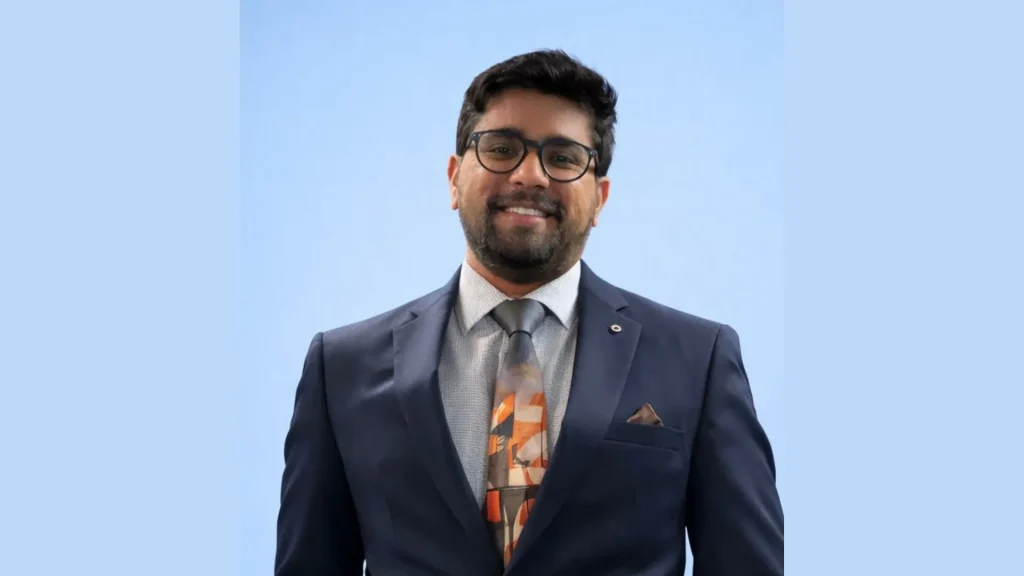

Ayushman Kacker, Principal Associate at Khaitan & Co and an alumnus of Army Institute of Law, has carved a formidable presence in commercial litigation and international arbitration. What began as an unexpected entry into law evolved into a focused pursuit of dispute resolution, refined through years of courtroom discipline. Having worked on complex oil and gas disputes, intellectual property arbitrations, and high value contractual conflicts, his journey reflects strategic depth, professional resilience, and a growing leadership role in shaping modern commercial dispute strategy.
This interview has been published by Anshi Mudgal and The SuperLawyer Team
Looking back at your time at the Army Institute of Law, what first drew you toward dispute resolution and arbitration practice?
Interestingly, law was never my first choice, it happened more as a happy accident than a carefully scripted plan. But sometimes the most meaningful journeys begin that way. My first real tryst with dispute resolution was during a Trial Advocacy Moot Court Competition at UILS, Punjab University. The process of building a case theory, responding to judicial questions, and thinking on my feet was electrifying. There was no looking back after that. Moot courts deepened my interest, and internships with law firms and litigators solidified it. I realised I was drawn to structured argumentation and strategic thinking. Arbitration, with its blend of law and commerce, felt like the perfect intersection of intellect and instinct.
In your early years at the Bar, what were the moments that tested your resolve to continue pursuing litigation?
My early years felt very much like how I was taught swimming, thrown into the deep end of the pool and expected to stay afloat. There was a lot of learning on the job, figuring things out in real time. It can be overwhelming initially. But I have come to believe that in litigation, showing up consistently is half the battle. My father often told me – cliché as it may sound – that success is 99% perspiration and 1% inspiration. That stayed with me. I was also fortunate to have strong mentors who led by example. Their discipline and integrity reinforced my resolve. Over time, the chaos begins to look like opportunity.

Was there a mentor, senior, or a particular matter that reshaped the way you understood courtroom strategy and advocacy?
I have been blessed with exceptional mentors throughout my journey, in my current role and in earlier organisations. Inspiration has come not just from seniors but also from junior colleagues, who constantly challenge and sharpen perspectives. A defining early matter was an IP arbitration arising from a family settlement agreement. It allowed me to work alongside stalwarts like Mr. Gopal Subramanium and Mr. Darius Khambata. Watching them argue was transformative. They demonstrated that advocacy is about precision, restraint, and clarity, not theatrics. That matter reshaped my understanding of strategy: simplify the complex, own your brief completely, and let preparation speak.
When you transitioned to your current role, what inner shift was required to handle higher stakes commercial disputes?
The transition required a conscious shift toward greater ownership and intentionality. Higher-stake disputes demand more than good drafting, they require strategic foresight and accountability. Patience as a virtue goes a long way in complex commercial matters, where outcomes unfold over years rather than months. I also learned that usually, the harder choice to make is the right choice, whether it is taking a principled stand, advising caution to a client, or investing additional time to perfect preparation. Growth in such roles comes from embracing responsibility rather than avoiding it.
Among the arbitration matters you have handled, which matter became a defining turning point in your career?
While confidentiality prevents me from discussing specifics, several matters have been pivotal. Working on one of the largest oil and gas disputes under a Production Sharing Contract in an international commercial arbitration seated in India. A IP arbitration under a family settlement, spread across multiple forums, was particularly defining. Disputes arising from a Distribution Franchise Agreement with a state-owned distribution company also provided complex regulatory insights. Each matter reinforced that preparation, ownership, and strategic clarity are what ultimately distinguish outcomes.
While representing large corporations as well as MSMEs, what discipline helps you remain steady under pressure?
Preparation is the single greatest stabiliser. When you know your record, your contract, and your weakest point better than the other side, pressure becomes manageable. But preparation alone is not mechanical, it requires intentionality. I try to approach every matter with ownership, asking: how can I add value beyond the brief? Reliability is equally important. Clients draw confidence from knowing that you will deliver consistently and thoughtfully. I also believe in anticipating the worst-case scenario and preparing for it. That mental rehearsal builds steadiness. Ultimately, composure under pressure is not personality-driven, it is preparation-driven.
Behind your rise to Principal Associate, what unseen challenges helped shape your journey?
Behind any professional milestone lies quiet sacrifice. The legal profession demands long hours, emotional bandwidth, and mental endurance. It is not a singular achievement, it is made possible by family support and the understanding of loved ones who accept the unpredictability of the profession. There were days when showing up itself felt like an achievement. But consistency builds grit. I have also learned that growth often requires making difficult choices, taking on heavier responsibilities, stepping outside comfort zones, or choosing long-term learning over short-term ease. Usually, the harder choice is the right one. Over time, these invisible decisions compound into visible milestones.
After years of handling commercial and contractual disputes, how do you see the next phase of your professional growth unfolding?
The next phase, for me, lies in deeper specialisation combined with strategic leadership. I intend to continue strengthening my practice in complex commercial disputes, while also mentoring younger lawyers. Intentionality in work, reliability in execution, and value addition beyond the brief will remain central. The goal is not merely to handle disputes, but to shape dispute strategy meaningfully.
What guidance would you offer to young litigators who aspire to build a career in arbitration and dispute resolution?
Attend court as much as possible in your early years. Even though I did not get extensive trial court exposure, I strongly believe trial advocacy is a highly underrated skill, and increasingly critical even in arbitrations. Cases are often made or broken during evidence. Be a sponge in court. Observe cross-examinations. Understand judicial temperament. Most importantly, embrace the deep end, growth rarely happens in comfort. Consistency, preparation, and integrity will take you further than flashes of brilliance.
Get in touch with Ayushman Kacker –