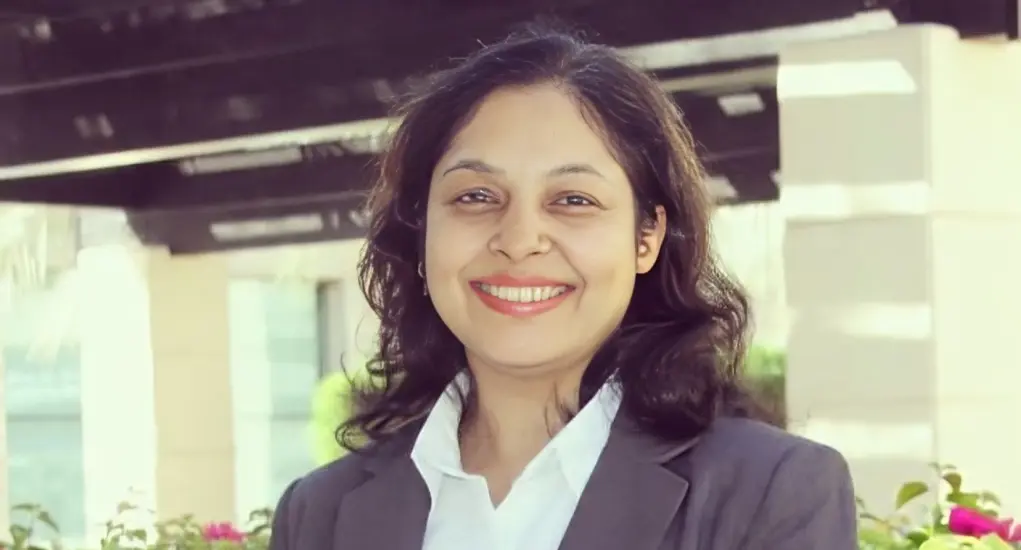

Smita Choudhary’s journey in intellectual property law is a compelling narrative of resilience, innovation and global perspective. From working across multiple jurisdictions including India, Dubai and Saudi Arabia to building a patent practice LAWIANS LLP, focused on biotechnology, engineering, sustainability and emerging technologies, her career reflects the evolving nature of modern patent law. In this conversation, she speaks candidly about navigating international patent systems, creating a flexible and inclusive work culture, building a green technology driven IP practice and adapting to disruptions such as AI and COVID.
This interview has been published by Anshi Mudgal and The SuperLawyer Team
Ma’am, you are currently based in Saudi Arabia. How has that particular environment helped you flourish and nurture yourself as a patent attorney and in starting your own law firm?
It is a very interesting question, and I am glad you have asked this as the very first question. See, Saudi Arabia, do not take it as a location term. If we remove that country name, the work is the same. The patent culture, the work of a prosecutor, the work of a litigator, or being an advisor or a legal technical expert. The work will always be the same.
It works like a brick. You just have to adjust it in the form of where you want to create a building. When I first moved, yes, of course, it was very difficult to find ground here for a working woman who is over 35 and already has an established journey. Again, to regenerate the journey in the field of patent advocacy and the law field, which is a very challenging one, because when we are below 35, we are very challenging, smart, and everyone is welcoming.
But after that, so many responsibilities come up related to your family, your husband, your kids, and then the office. So they expect that this kind of employee has to be available 24 by 7 on one call. But that does not change your passion to work on it. So it was difficult in nature.
But one of my reference friends, we were working together in Dubai, referred me to one of the law firms that was working and looking for a patent advisor in the biotech and pharmaceutical industry. So it was one of the open lights for me that, okay, let us work together and start establishing our own law firm in the meantime, because there were many patent applications that were willing to directly file in the Indian Patent Office. Being an Indian patent agent and a registered one, I thought that let us start our own so that any India filings for my foreign clients in the Middle East would not have to go to another third associate and then add on to the pricing.
We could have our own in-house filing team and the portfolio management team so that we could help them in patent preparation starting right from the search analysis, then the patentability test, then drafting, and thereafter filing. Sometimes this helped me as an in house origin, where you have a patent from the scratch level.
Now you do not need to go to another party to make a search, then to another party for drafting, and then for reviewing. Then we will file in the UAE or Saudi Arabia. I was aware of this, and still I am aware of the UAE filing pattern and how the drafting should be, and the Saudi Arabia filing pattern, how the specification should be drafted, what the claims should be, how many claims should be there, and what the drawing pattern should be, and which things we have to protect and which things we are not supposed to protect here.
I was aware of this. So drafting in my own in-house teams, like a biotech team, a mechanical team, an IoT based team, and a software based team, helped me in making this portal successful.
You worked in India, then moved to Dubai and then to Saudi Arabia. These are different jurisdictions. How did you acquaint yourself with them? How did you manage the move and build the name of your law firm? How did you come up with the concept?
Actually, it is a very nice journey, and my only answer will be that I faced many rejections. I was rejected everywhere.
Once you face failure and rejection, you can work on your faults. It means that it tells you where you are lacking and what you need to do for the next jump. This was the first thing I learned. I used to give lots of interviews.
I was rejected just because I was overqualified. I was rejected just because they did not have patent facilities. I was rejected because they already had someone with an Arabic background and knowledge of the Arabic language. So language was one of the issues, and they rejected me. I was rejected because I was a mother. I had a full time job and I could not devote myself fully to the company. So they rejected me, saying that I needed to work after 6:00 PM or 7:00 PM. So these were the points.
I pointed out each and every rejection and took it as a challenge, that let us make a good, environmentally friendly office so that whether you are 20, you are 16, you are 18, you are 30, or 50 or 70, you can work.
You can take your own time whenever your free time is there or your working schedule is there. Like every animal has a working time, they hunt at that time. Likewise, we ladies, kids, students, entrepreneurs, or internship holders work at different time periods.
In between, COVID was a big boom for us. COVID gave us full wings to work at our respective time periods. You were not only bound to work from nine to five. You could work whenever you were ready. So this was the plus point. I thought that let us hit the iron. I thought that we would create a good environment.
Everyone would be welcomed. If they have skill and education, even a little bit of skill, I would not tell them that this is the job you have to do. You have to do business development, or you have to do drafting, or you have to do analysis. You need to tell me what area you want to work in.
If you love analysis, go for it. Do research analysis. Do patentability searches. Make a good FTO report. Bring uniqueness into that. If you like writing and drafting, work for the drafting team. If you are good at convincing the examiner, go for the prosecution team. If you want to go for High Court work, go for litigation.
So I wanted the intern to tell me, or the people who were coming into my field, to tell me that, ma’am, this is what I want to work on. Because I was not the one to scrap and make them a sculpture. They were already built. I just had to place them in a beautiful place, like, okay, you handle this department, you handle that department.
There were no bondings and no limitations. I just gave free wings and a free canvas to develop talent and develop more strategic planning. Some interns and employees came to me knowing nothing, but they really wanted to work in IPR. So what I planned was to get them educated and trained by people who were already in the business and providing training to enter this field, like one of my colleagues, or you can say she is my co patent lawyer as well.
She trains interns. Ms. Gauri Waghmare trains interns in patent drafting, search analysis, landscaping, and how to make a response to the First Examination Report. So with three to four weeks of training, you come to us, take the business, and start working. This is how we have developed a good team to work on it.
Creating such a free space is truly remarkable. How did you develop this mindset, moving from biotechnology to patents and then shaping this journey with the idea of giving people the freedom to work on their own terms, even after COVID, when not everyone could understand this concept? How did this journey begin, and what led you to this approach?
You know, being a lawyer, you will understand which is your best part and which is your best time. If you want to draft or write something, or you want to do some research on articles or sections for the next day’s hearing or presentation, you need a smart space. You need a completely silent space where you can say, okay, this is my time. Maybe I am happily working from 4:00 AM to 7:00 AM in the morning. That is the time. Maybe 2:00 AM to 6:00 AM. Maybe 11:00 PM at night, like that. You need to find your own time zone when you are most happily active and doing your work, because I know that if the kitchen is dirty, if the bed is dirty, or if the laundry is dirty, I cannot concentrate. I have to cook. I have my kids. I cannot keep them hungry and start working, because when I start working, my son will immediately say, mama, I am hungry. That means I have to fulfill that demand before I open my laptop.
There was an incident when I was cooking for my three year old kid. My client called me, and my son picked up the call. He was very small at that time, three years old. He said, do not disturb my mama, she is cooking for me. You can call after 15 minutes. He said this in his own toddler language. My client happily said, okay, I will not disturb mama. I was unaware of this. Sometimes, when I was in the washroom, he would say that my mama is in the washroom. I later realized that he had said this to a client. After some time, my client called me again after one hour. He said that your assistant picked up the call and told me not to disturb you, so I am not disturbing you. Are you free? Can we talk? These kinds of things created a good relationship with my client. He understood that Smita is a family person and has kids to take care of, so he would not disturb me during that time. Likewise, the client became my family. The first thing I learned was to establish trust.
This all started in December 2020. I was working with one of the IoT based companies, RPMA Networks, in Dubai. It was an engineering based team with AI, and at that time AI was booming. AI related inventions were already germinating and happening.
In that process, we had a team of engineers who were very knowledgeable in the fields of communications, software engineering, and computer science. I was from a core biotech background. I told my boss that since I am from biotech, I would not understand the technology and that I would need an engineering team. They would help me understand what the technology is, how it is distinguished from the prior art, what the invention is, what we are going to claim, and what will make it suitable for IoT based vehicles that are connected to each other. I asked them to give it to me in a proper flow chart for drafting.
They had the technical knowledge and technical language, but I was there like a brick. I arranged each paragraph and each claim according to my drafting regulations for the complete specification. I started with IoT, which I was completely unaware of. I wrote the language exactly as dictated by the inventor. Whatever he said, I drafted it. Luckily, the first draft was filed in the UAE, and within 12 months, we moved to the USA via PCT. There were four patents lined up for drafting, and all were accepted. We made a few adjustments to the claims, and once they were qualified and granted, they were accepted by the examiners.
The UAE Patent Office also accepted the decision of the US Patent Office. This gave me full confidence to start more work. It gave me motivation to move ahead. I was working continuously, and because of COVID, we had reduced salaries and I was completely working from home.
Then my senior told me that they were closing the innovation department. They said they did not have a job for me, but I would be half paid and could do as much as I wanted. I realized that this was the point where I needed to start my own journey. At the same time, I was attending interviews and exploring opportunities with different law firms.
One of my favorite inventors messaged me saying that he had a few inventions and patent applications in India, along with some new mechanical engineering related inventions, and asked if I could help him. He was very senior and was the first person who told me, Smita, why do you not start your own practice? You are such a good draftsman. I told him that I am from biotechnology and that I only know patent rules, regulations, and drafting techniques. If he provided the engineering language, I could draft for him.
He was around 55 or 60 years old and said that he was old school. He told me that he would dictate and I could write. Even the drawings were made on graph paper, like traditional engineering drawings. I said, okay, no problem, we will find an expert who can do it for us. That is how we started the journey. We would sit together for two to three hours, drafting, doing searches, and working through the inventions. We filed in the UAE, and later we developed a mechanical team because we had more mechanical inventions coming in. I realized that we needed a pure mechanical engineering team.
Then Amit came to me and said, ma’am, I want to work out of the box. I do not want to work the way traditional law firms work. I told him that I understood what he wanted and that he had the space to do it. Our first invention came in, and what we learned was that in traditional law firms, whatever material you get, you draft it and file it, and then later deal with objections, more examination reports, more responses, and more costs. This becomes very hectic, and inventors often lose their motivation during the process.
I decided to cut that approach out. As a new patent lawyer, I chose to work in my own way. I drafted in a manner that the examiner could clearly understand what the claims were about, what the subject matter was, and how it was different from the prior art. As a result, we only received formal objections, such as removing ambiguous terms or adjusting wording and claim numbering. That was it. The application was accepted, published, and granted shortly thereafter.
This helped me understand that if you put 80 to 90 percent of your effort into drafting and reviewing before filing, it reduces the prosecution burden. The examiner is happy, and the inventor is happy. The inventor then comes back to you with more work. This is how our journey started.
You have also worked in climate change and sustainability related patents. How did you build your practice around green technology and how do you stay updated globally? So how is this green technology supporting the whole cause and how have you built your practice around that?
Exactly. You have to be very open, cautious, and observant of the market and what is happening, just like a cat or a dog. Have you ever seen a pet cat or a pet dog? They are very cautious and always alert. Who is coming? Who is going? Which car has passed? Who has come?
They sense it and they smell it. So be like an animal and sense the surroundings. Five years ago, when artificial intelligence was emerging and COVID was taking over, at the same time climate change was also becoming evident. You may remember that the skies became cleaner, the roads were clean, and fresh water systems improved.
New fish started appearing in ponds. You must remember these things happening and showing up as positive after effects of COVID. Parallelly, since Dubai is a very welcoming city, it was embracing artificial intelligence on one side while also balancing sustainability.
Sustainability means whatever we have now, we have to preserve it and also bring more business so that we can sustain ourselves for the next 10 or 20 years. During COVID, we truly understood the value and meaning of sustainability. We realized that more sustainability related projects should come so that we can survive well for the next 20 to 30 years.
This was the lesson of that time period when the pandemic happened. If you study the culture, environment, and temperature of the UAE, you will understand that it is very hot. So projects were initiated to create fresh water. We were working on water conservation. Artificial lakes and fountains were created, which helped develop algae. Wherever you see algae and green areas, it indicates fewer harmful bacteria and cleaner water.
My inventor, Mr. Sarfraz Dairkee, said that he had an innovation that could help clean these artificially made ponds and lakes. If you visit these areas, you will see many lakes, ponds, and artificial swimming areas created in front of villas, but they require proper cleaning.
If you go to an open, natural lake or pond, it gets cleaned automatically because the water is not stagnant. The bacteria are healthy and everything functions in a balanced microbiological manner. This is not the case with artificially generated water bodies. So this device was developed to help address climate related challenges. They wanted clean and fresh water for swans and ducks.
In this way, one climate change related invention was developed, which we filed in the UAE. It was well accepted and granted, and it is now being monetized and produced. It is being purchased by different malls. If you go to the Dubai Mall, my inventor’s device is already there, cleaning fresh water. If you visit certain lakes, the device is already installed and cleaning stagnant water.
The second project we worked on was a greenhouse to protect plants. In high temperatures, small and tender leaves cannot flourish or sustain themselves in an arid environment. So we created a greenhouse atmosphere that allows plants to grow even in such conditions. This was another climate change related initiative.
Another invention was related to buildings. If you visit big cities like the UAE, Saudi Arabia, Dubai, Riyadh, or Jeddah, you will see high rise buildings made of glass. When these glass surfaces are exposed to sunlight at temperatures of 78 to 80 degrees, carbon emissions and carbon footprint increase, causing pollution.
Around 2022 or 2023, Apple released a video highlighting how they were making products with reduced carbon footprint and aiming for sustainability and zero carbon emissions. My client said, Smita, I have also developed something similar. It is a shield device that can be installed on building window frames to reduce temperature impact and make the environment calmer.
He is a very innovative inventor and has developed many useful inventions. Near airport areas, you will see high rise glass buildings that reflect sunlight into pilots’ eyes during flights. A solution was needed for this. He suggested making buildings greener by developing green plants on top of them, which would reduce sunlight reflection.
This invention focuses on adapting buildings to arid environments and reducing pollution for people working there. Many workers in warehouses and construction sites work at temperatures reaching 80 degrees while maintaining electricity and building structures at great heights. The heat is unbearable and survival becomes difficult.
So we developed helmets designed to keep their heads cooler while working. Although work is restricted between 12:00 PM and 3:00 PM, even after 10:30 or 11:00 the temperature remains difficult to manage.
These are the kinds of climate change related projects we work on. The best part I learned from the UAE and Saudi Arabia is that local innovators are deeply knowledgeable about their environment and understand what kind of devices are useful for their region. We have worked on these inventions from the scratch level.
This is how we actually started.
You have worked nearly two decades now in IP, patents and a variety of changes you have seen in innovations and in different kinds of technologies.You have witnessed many disruptions in patents over decades. How do you see the future of patents in the next decade? Especially after COVID.
Exactly. Very strong question. Why? Because disruptions are not happening only now; they have also happened in the past with patents. Since 1970, so many disruptions have occurred because technology and innovation are such things that they develop, and people think they will stop.
No, it keeps happening. There is no finish. It keeps happening again and again, just like our RBCs get a new life after every 21 days. Innovation is happening after every 21 days. So you can see that since 1970, many innovations, disruptions, and challenges have been faced.
When I started my patent practice, I found that stem cell related inventions were very challenging to get granted by the Indian Patent Office. Patents related to pharmaceuticals, if they do not show efficacy and a synergistic approach, do not get accepted. Patents related to microorganisms were accepted later. Patents related to semiconductors, devices, or software require a lot of hardware disclosure, more paperwork, and more lab work. So this was always there. It was never hidden or vanished. It is evolving, and it is evolving in a more challenging manner.
Even now, disruptions exist in the form of AI. I will tell you, being in patent practice, and with many patent practices abroad in Singapore, the USA, the UK, and Germany, they will tell you that AI is a very helpful tool that can assist you. I tell my inventors not to type anything about their new ideas on ChatGPT or Google, because these are monsters for them. They are like cookies for them.
They will eat your idea. After two days, the same idea can be filed by some other company because this becomes food for them. We are feeding them. By the time you are thinking whether to file or not, whether to search or not, which agent or attorney to go to, or which law firm to approach, a third person may already have filed it. I always tell people to write their idea in a diary and come to me. I will search for you. We will do a prior art search and a patentability search, and then we will tell you whether it is eligible or not.
AI is there, but it is not going to disrupt everything. It is going to help in a smarter manner. Plus, patents will become more impactful and stronger, and everyone will need them. Even your voice and face recognition need protection. They have to be copyrighted because we use digital signatures and even our voice as a password. Nowadays, in medical facilities, by listening to your voice, they can even tell what you are suffering from. This kind of advancement is coming.
So more intellectual property rights related developments will happen in the next 10 to 20 years, and on an enormous scale. Everyone will look forward to reserving, preserving, and protecting their personality, intellect, and ideas. Technology is becoming very strong, and the stronger it becomes, the stronger, more evolved, and more adaptive we have to be. We have to adapt. This is Darwin’s theory of evolution.
Just like that, we have a theory of evolution in patents. It will keep evolving. Today we have AI. After some days, maybe we will look for something else. I saw one example recently. I was watching a reel where a person went to a shop and asked ChatGPT what to buy, and on the other side, the shopkeeper said that a person has come to buy certain things. Everything was happening automatically.
It feels like we have lost that charm of thinking for ourselves. Earlier, you would go to a shop and buy what you knew you needed. Now ChatGPT tells you that you do not have milk, eggs, or vegetables, so you should buy them. It even informs the shop that this person has come to buy these items. So this is happening.
But common sense will always be there.
I really would request you to share some insights or your advice to the young professionals because they are always a little skeptical about how to choose what to choose, where to go, whom to approach, or maybe how to understand which subject or which particular area do I want to enter?
Yeah, sure, sure. It is part of life. You know, my husband says that wherever you go, you start talking about patents and innovation everywhere. When I am having a coffee at Starbucks, I will tell you why it is costly. I have even told myself why iPhones are costly, because these are special patents.
Since Apple cannot do everything, it has taken licenses from Qualcomm and other companies to provide all the 3G and 4G technologies for the chips. So if you cannot do that, you have to hire. And if you hire someone, it will be costly. So patents play a big role.
It is not bad. It is a very nice thing. I say that it is like your mother in law. You cannot ignore her, and you cannot live without her. You have to sustain her, you have to adjust with her, and you have to face it.
Get in touch with Smita Choudhary –