
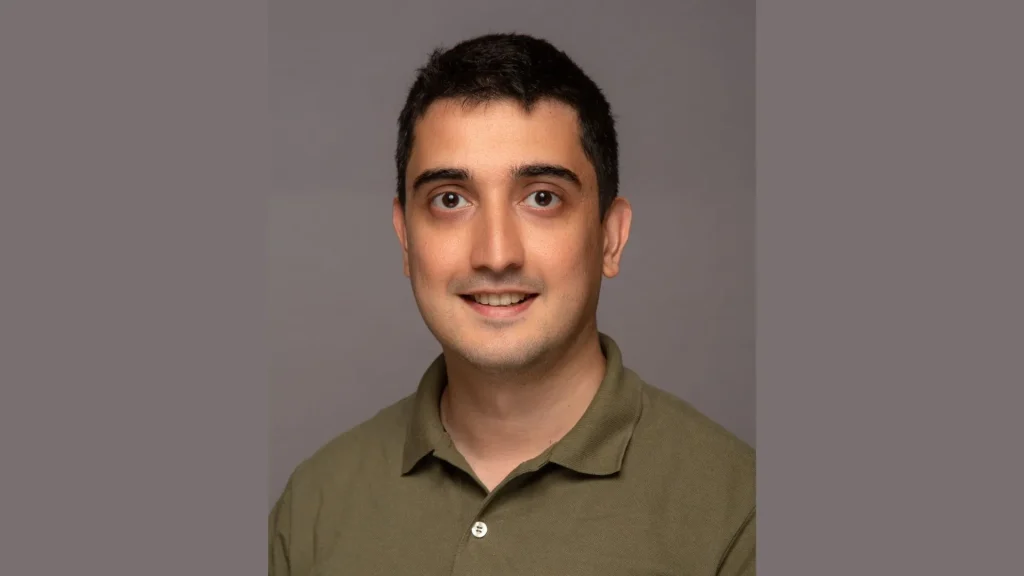

Aaron Kamath, Co Head of the Tech, Digital and Commercial Law Practice at Nishith Desai Associates, reflects on a legal journey shaped by curiosity, rigorous academic training and close engagement with emerging industries. In this conversation, he discusses the evolution of his practice in India and internationally, the influence of advanced study in the United States, and his work at the intersection of technology, media and intellectual property law. The interview explores how lawyers must think beyond traditional boundaries, balance ethics with innovation, and remain rooted in first principles while advising on artificial intelligence, fintech, ecommerce and digital regulation.
This interview has been published by Anshi Mudgal and The SuperLawyer Team
What initially drew you to the legal profession? After more than a decade in practice, does that original sense of curiosity and intellectual engagement still guide your work today?
My early interest in law was shaped by a mix of curiosity and storytelling. As a student, I spent a fair amount of time reading John Grisham novels and watching legal dramas on television, which introduced me to the idea of law as both analytical and narrative driven. What appealed to me most, even then, was the process of interpretation, reading between the lines, constructing arguments, and finding alternate ways to approach the same problem. That inclination toward analytical thinking and questioning assumptions eventually translated into a serious interest in pursuing a legal degree. More than a decade into practice, that curiosity has not diminished; if anything, it has become more central to how I work. Each new business model or regulatory shift presents fresh questions rather than settled answers. Clients’ new and evolving business models require you to constantly test first principles and adapt them to new contexts. That ongoing intellectual engagement is what continues to motivate me.
Over the course of your career, you pursued two master’s degrees (LLMs) and also worked toward becoming dual-qualified. How did you balance these academic commitments alongside the demands of professional practice, and what motivated you to take that path?
My decision to return to academics was largely driven by timing and intent. I pursued my first Master of Laws degree at Jindal Global Law School during the COVID-19 pandemic, alongside working as a lawyer. With lockdowns and travel restrictions in place, it felt like the right moment to go back to the books and revisit the theoretical foundations of business and commercial law. Balancing practice and coursework were demanding, but it was also energizing, and it gave structure to weekends that might otherwise have blurred into the workweek. In 2023, I took a sabbatical to pursue a second Master of Laws degree at UC Berkeley, California which was a very different and deeply immersive experience. Living and studying in the Bay Area placed me at the heart of global innovation and technology discourse. I had the opportunity to learn from leading academics and practitioners and to study subjects such as crypto regulation, fintech, telecommunications, and disruptive technologies at advanced levels, alongside U.S. constitutional law and legal history. Preparing for and passing the bar exam in the U.S. was one of the most challenging journeys of my life, both intellectually and personally. Post my academic break, working out of the firm’s Silicon Valley office in Palo Alto allowed me to witness the AI revolution at close quarters. Engaging with founders and investors who speak the language of ideas and innovation proved perspective-shifting, an experience I carry with me as I look to the road ahead.
Your practice spans technology, media, IP and commercial law, culminating in your leadership role at Nishith Desai Associates. What factors shaped this trajectory, and what attracted you specifically to these intersecting areas of law?
My trajectory into technology, media, and commercial law was less pre-planned and more the result of early exposure to how law operates in spaces that are still being defined. While I entered law school with an interest in disputes, my internships introduced me to technology and IP-driven work, where the questions were often novel and the answers far from settled. At the time, this was a relatively niche practice area in India, which meant there was significant room to think, build, and shape positions rather than rely on established templates. What drew me in was the way these areas sit at the intersection of law, business strategy, and innovation. The advice required is rarely purely legal; it demands an understanding of how products are built, how markets function, and how regulations respond to change. Over the years, the practice has expanded from traditional IT and media into digital platforms, consumer protection, telecom, fintech and blockchain, e-commerce and social media, privacy and cybersecurity, and AI. Being part of a practice that grows alongside innovation has made the work both challenging and deeply engaging.
Alongside your practice, you have written articles for renowned publications and spoken at global conferences, what prompted this move into thought leadership in the TMT space?
A significant part of my work has involved engaging with tech policy, including stakeholder discussions and submissions to regulators on issues such as foreign investment in e-commerce, e-wallet regulations, data protection, gaming, and AI regulation. Beyond day-to-day practice, staying current with legal and regulatory developments is essential, particularly in fast-moving sectors. Clients often come to you not just for answers, but for perspective and early issue-spotting. Knowing the law is the bare minimum; understanding where it is headed is what adds value. Writing for international publications (such as Journal of Innovation, iGaming Business, IPBA Journal) has been a way to deepen my own understanding of regulatory and industry developments, sharpen my thinking, and improve clarity in communication. I was also given the opportunity to speak at global conferences, across India and in Singapore, Dubai and Chicago. I also conduct webinars and guest lectures for young lawyers and law students, which keeps me connected to first-principles learning.
How do you see your practice evolving in the future?
Looking ahead, a large part of my practice will continue to focus on future-facing business models and anticipated regulatory change. Clients are looking for a combination of strategic, legal and regulatory advice taking into account global legal frameworks that they already deal with in other markets. Softer aspects such as ethics and reputational risks are also relevant to consider. Emerging areas such as AI, digital assets and Web3, and data-driven products will require lateral rather than mechanical thinking. AI itself will also change how legal services are delivered. AI is a tool to assist decision-making, not replace it. Used thoughtfully, it can enhance efficiency in research, issue-spotting, and contract review, allowing lawyers to focus more on judgment, strategy, and problem-solving. That said, maintaining quality control and professional accountability will remain non-negotiable.
Apart from your legal work, you have also been active in public speaking and community welfare initiatives. Can you tell us about your experiences outside your work commitments?
A good work-life balance is important and is sometimes more talked about than achieved. I believe that instead of being a sliding scale of time spent at work, work-life balance is the quality of time spent in one’s personal and professional life. Public speaking is something that I embraced from my primary school days, as a way of building confidence and expressing myself. From giving speeches in school assemblies, to winning moot courts and debates in law school, to speaking at conferences and workshops as a lawyer, I have always felt comfortable on stage. I started my journey was a toastmaster a few years ago and this helped with finer aspects such as structuring speeches and voice modulation. I have also volunteered at social welfare initiatives such as assisting with a cardiac health check-up camp and clothes donation drive. It brought me a sense of satisfaction to lend a hand to the community.
With the depth of experience you have built, what guidance would you offer to aspiring lawyers and young professionals navigating the legal profession today, particularly those interested in emerging and interdisciplinary fields?
My advice to young lawyers is to stay grounded, especially in an environment filled with new-age jargon and access to AI tools. I have been privileged to have worked with some of the best legal minds in the industry. This has helped me grow as a professional, of course coupled with effort from my side. Three bits of advice that I most commonly give to law students and young lawyers is (i) Learn from your immediate surroundings: observe and absorb as many positive attributes that you can from senior lawyers that you work with and against, including the way they analyze the law, draft, manage their teams and handle clients; (ii) Don’t get pigeon-holed too soon: broad-base as much as possible in the first few years rather than aiming to specialize in a niche area of law at an early stage, and (iii) Question everything: Ask questions (within reason) of your colleagues and clients to get the best understanding of things, revisit provisions of law that you may have already read several times as new thoughts can arise, and don’t go with “standard language” or “market practice” unless you really understand it and can justify it.
Get in touch with Aaron Kamath –