
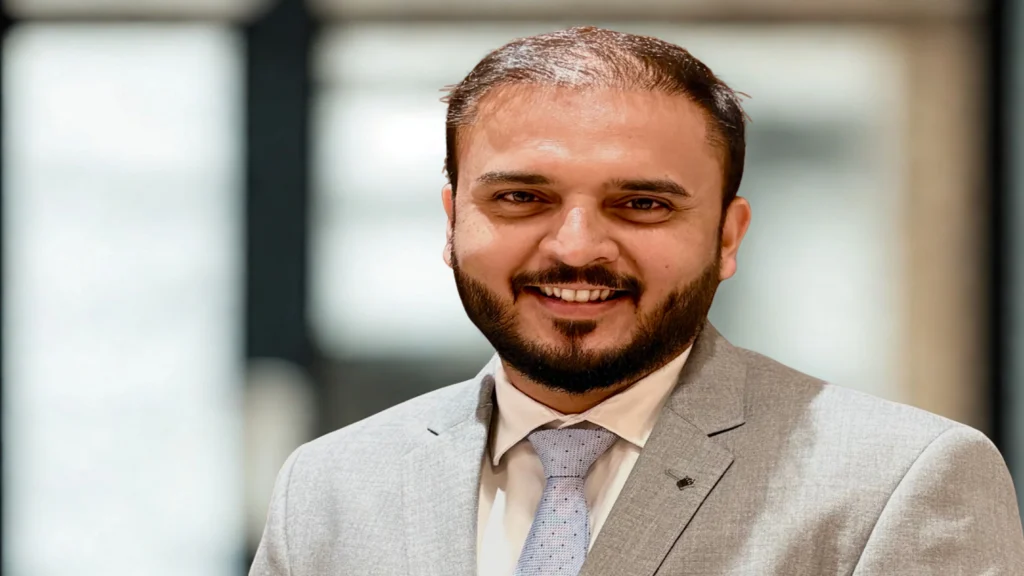

Pratik Rajopadhye, Managing Partner at Tavish Law Offices LLP brings a rare blend of commercial understanding and litigation depth shaped by his roots in commerce and early professional training in Delhi. An established lawyer today, who built a thriving practice in Pune, his journey reflects resilience, rigorous preparation and strategic approach to complex disputes. Known for his clarity, discipline and client focused thinking, he reflects on the defining experiences that shaped his craft and the evolving landscape of commercial and criminal disputes.
This interview has been published by Anshi Mudgal and The SuperLawyer Team
Coming from a commerce background, what early experiences or challenges shaped your decision to pursue a career in the legal field?
My foundation in commerce provided me with a crucial understanding of business structure, finance, and contractual obligations, which are the very pillars of corporate law and litigation. The pivotal moment was realizing that while commerce deals with creating value, the legal field deals with safeguarding that value and ensuring equitable practice. Specifically, an early experience of running a T – Shirt designing and printing business as a college project made me recognize the intersection of finance and law. Getting the necessary permissions, compliance made me intrigued with the way businesses are run. Thereafter, I decided that a law degree would not just be a career change, but a powerful force multiplier for my existing commercial knowledge.
What challenges or defining moments played a key role in building your foundation as a professional in the initial years?
The first few years were all about getting my feet wet and dealing with the steep learning curve that comes with professional practice. I actually started interning in my second year of law school. Those internships were brilliant for gaining practical insights and learning what I call “Court Craft.” They made the jump from academic theory to actual practice much smoother. My early internships also taught me the little nuances of client counseling and managing cases effectively.

After that, I decided to chase opportunities in Delhi. I started by interning with a couple of top-tier firms and then began my practice there right after graduation. My seniors were really great; they were kind enough to let me sit in on client meetings and take notes.
A real turning point was when I was asked to revive an old case before the NCLT. The High Court had sent the matter back for a second look, but the file had basically been forgotten, and nothing had been done with the High Court order. My task was to follow up with the NCLT and get the case listed for a fresh hearing. Later on, I was also asked to prepare questions for cross-examination in an arbitration case before a retired Supreme Court Judge.
These early responsibilities hammered home the absolute necessity of meticulous preparation, paying close attention to detail, and keeping my cool under pressure.
These experiences instilled the discipline and resilience needed to build a reputation for thoroughness and reliability, which are essentially the cornerstones of my professional approach today.
Establishing your independent practice in 2019, what motivated that decision, and how did you navigate the uncertainties and responsibilities of starting your own firm?
Starting my own practice wasn’t a sudden decision; it was something I’d always wanted to do. I had a really good chat with my seniors up in Delhi. They suggested I should head back to Pune to set up my own shop. The best part was their reassurance, they told me I could always come back and join them if things didn’t work out. Honestly, those words gave me the push I needed to take that leap of faith and return home.
Eventually, my practice started doing well, and I realized I needed a proper structure. That’s how it grew into Tavish Law Offices LLP in 2023, after four years of running things solo.
Going independent definitely came with its own set of challenges. Navigating all the uncertainties meant I had to be super careful with:
- Assessing risks;
- Planning finances meticulously; and
- Leaning on my strong professional network.
My main responsibility wasn’t just being a good lawyer; it was also managing the business side of things, everything from admin and tech to building a solid team, all while making sure our clients still got the best possible results. For me, it was about building something lasting, not just running a small practice.
What was the pivotal breakthrough that transformed your journey from a young litigator to someone handling high-profile challenging matters?
The pivotal breakthrough was a criminal matter pertaining to the alleged bitcoin scam that I got as my first brief after going independent. The bail of my client was refused multiple times in two separate cases. We had no option but to file a SLP before the Supreme Court. Notice was issued and bail granted. My senior with whom I worked in Delhi was kind enough to help me with the case. This case demanded not just legal skill, but innovative strategic thinking, multi-jurisdictional coordination, and bold advocacy. The successful resolution demonstrated that I could handle the highest stakes. This built the trust and credibility necessary to take up subsequent high-profile and challenging matters, transforming my practice’s trajectory
Among the complex and high-profile matters you have handled, which case stands out as the most challenging?
The most challenging case that stands out in my independent practice was a Public Interest Litigation concerning the Pune Metro.
My clients were retired structural engineers who previously held senior leadership roles (such as MD) in both public and private sector infrastructure companies. After experiencing a ride on the newly inaugurated metro, they identified significant structural deficiencies and potential lacunae within the station designs.
These were not minor issues; they were glaring lapses that carried the potential for a catastrophic disaster. After their initial written communication with Metro authorities failed to elicit a satisfactory response, they approached me to file a PIL before the Honorable High Court.
The High Court was responsive to our petition, directing an independent structural audit and mandating that the Metro undertake all necessary repairs where lapses were identified.
On a personal level, securing this outcome was incredibly satisfying, as I was able to make a small, tangible contribution to enhancing the safety of my city.
You have been involved in landmark multi-crore fraud investigations. How have these experiences shaped your approach as a litigator and leader?
Involvement in multi-crore fraud investigations has profoundly shaped my approach, primarily by reinforcing the need for forensic rigor and strategic patience. As a litigator, it taught me to look beyond the legal documents into the underlying financial data and digital trails, demanding a multi-disciplinary approach. As a leader, it underscored the importance of discretion, ethical fortitude, and building specialized teams capable of handling massive volumes of complex information under high pressure. These experiences have instilled a deep appreciation for proactive compliance and risk mitigation for my clients, shifting my focus from purely reactive defense to comprehensive strategic counsel.
What is your long-term vision for Tavish Law Offices LLP, and how do you plan to expand or evolve your practice in the coming years?
My long-term vision for Tavish Law Offices LLP is to evolve from a boutique firm into the preeminent authority in white collar crime, real estate law and Cross border commercial advisory and disputes in Pune. Expansion will be strategic, focusing on deepening our expertise in high-growth sectors like FinTech, AI governance, and cross-border commercial litigation. We plan to leverage technology to enhance service efficiency, invest heavily in the professional development of our team, and potentially explore strategic affiliations that allow us to offer seamless counsel across key commercial jurisdictions, ensuring sustained value creation for our clients.
What advice would you offer to law students and young lawyers who aspire to build a career like yours, and which resources or habits would you recommend to them?
My primary advice is to view a legal career as a marathon of continuous learning and ethical practice, not a sprint for early recognition.
Key Advice:
Specialize Early, Generalize Strategically: Find an area you are passionate about, master it, and then expand your knowledge base to adjacent fields.
Cultivate Resilience: Be prepared for setbacks and learn from them. The ability to bounce back is often more crucial than the initial talent.
Master the Facts: Never underestimate the power of knowing your case facts, documents, and precedents better than anyone else.
Recommended Resources/Habits:
Habit: Dedicate time weekly to read judgments and commentaries outside your immediate area of practice to broaden your perspective.
Resource: Focus on primary legal texts (Statutes and case law) rather than just summaries.
Skill: Develop impeccable written communication skills—clarity and precision in drafting are indispensable.
Health: Dedicate at least 30 mins everyday towards your health. As a litigator you often spend hours in court without having timely meals. Hence, it’s imperative that you dedicate 30 mins for exercise every day and try to eat clean as much as possible. It makes a huge difference when your mind and body is fit and aligned with your goals.
Get in touch with Pratik Rajopadhye –