
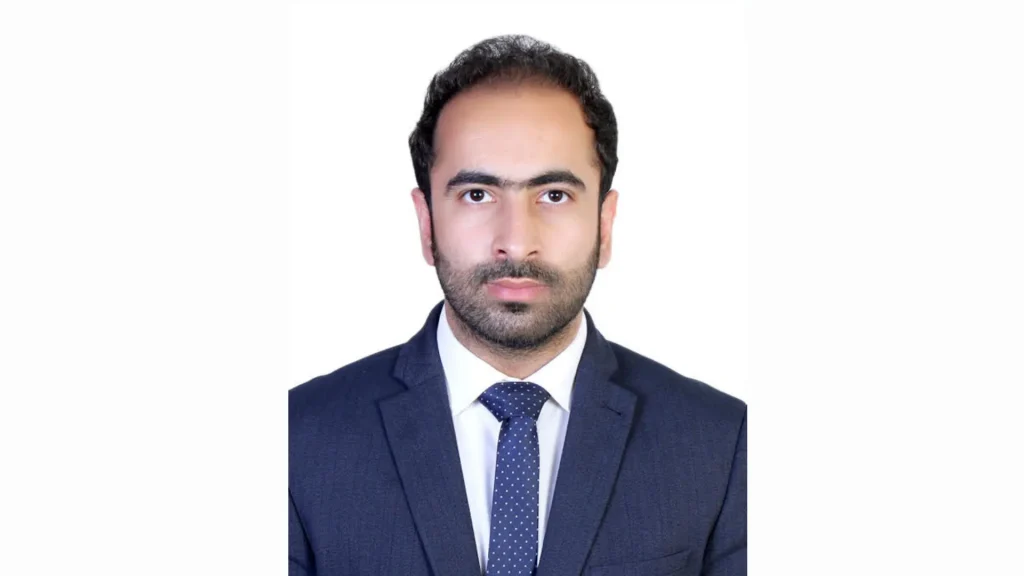

Tejasv Anand, a Disputes Lawyer and Partner and Co-founder at Vimarśa Law Offices, illustrates how discipline, clarity and sustained learning can shape a lawyer’s rise from top tier firm training to co-founding a law firm. With experience spanning criminal matters and commercial disputes he has built a career grounded in consistency, credibility and long term growth. In this conversation, he reflects on the key influences and turning points that guided his transition from structured law firm environments to establishing and co-founding his own law firm.
This interview has been published by Anshi Mudgal and The SuperLawyer Team
Was law always your intended career path or were there particular influences that shaped your decision to pursue it?
Law wasn’t the intended path at all in my early years. Coming from a commerce background, I genuinely thought I’d end up doing an MBA, I even took admission in B.Com (Hons.) at Delhi University. But while preparing for law entrance exams, I found the subject far more engaging. In fact, even after joining law, I was not sure if I would end up pursuing it. However, once I started interning, things became clearer. Those internships really shaped my understanding of the profession and eventually pushed me toward law. Watching the amount of groundwork that goes into a matter before a counsel stands up in court fascinated me a lot. What also fascinated me and continues to fascinate me even today is the sheer impact this profession has on people’s lives. Watching how a well prepared and argued matter can bring relief, protect rights, save businesses or in some cases even bring dignity back to someone, continues to fascinate and inspire me.
You began your journey with one of the top tier firms in the country. What were the early learning experiences that shaped your foundation and how did you navigate such a significant opportunity so early in your career?
In the early years, I’ve always felt that diligence is one’s biggest asset. If one works sincerely, the team begins to trust and give better work and more responsibility. In the initial phases one might feel that one is not getting matters to argue or drafts to make independently. However, every amount of work one puts in is preparing one, and if one is diligent in the tasks assigned and observes well, in no time the team will give bigger tasks. Illustratively, one regularly gets the task for drafting a list of dates. While the task appears to be lengthy and time taking, it gives an opportunity to be on top of facts and put them through in a crisp manner. So if one does that diligently, not missing out on any important fact etc., it will bring reliability and dependence.

I was fortunate enough to receive a PPO from Khaitan & Khaitan, which gave me exposure to different areas of law. Later, when an opportunity arose at Khaitan & Co., I felt confident enough to apply. In retrospect, I feel that the early exposure in Khaitan & Khaitan gave me the self-belief when I interviewed at Khaitan & Co., and thankfully it worked out. I firmly believe that if one stays focused on one’s work while keeping an eye on the market, one will eventually find where one belongs. It’s not just hard work, it’s also about being aware of opportunities. Even if one is not actively looking, networking, talking to head-hunters, and staying connected on LinkedIn gives one a sense of the evolving market. For me and various people around, this awareness has been incredibly helpful.
What was the defining turning point that motivated you to chart your own path and how would you describe the transition of establishing your own practice?
I always knew that at some point I wanted to build something of my own. I wanted the freedom to choose the matters, the issues I wish to argue, and to appear before a wider range of forums. The transition, honestly, has been both exciting and overwhelming.
It’s exciting because every day brings a completely new kind of challenge from something as basic as figuring out the office location in the beginning to managing multiple urgent listings on the same day with clients expecting you personally. Navigating all of this keeps you on your toes in the best possible way.
At the same time, it’s overwhelming because of the fear of the unknown. When one steps out on one’s own, there are no guarantees, no guarantee of a salary, no guarantee of the workflow, no guarantee of the kind of work etc. Every matter, every client, every month comes with its own uncertainty. But I’ve realised that this uncertainty is also what pushes one to grow. It forces one to adapt, become more resilient, and trust one’s own judgment. The fear doesn’t vanish, but one learns to work with it, and in that process, one discovers what one is truly capable of.
What were some of the key challenges you faced while setting up your own firm and how did you overcome them?
The challenges I’ve faced and continue to face are quite varied. From hiring the right people and building an office culture, to managing clients, timelines, and unexpected situations, the list is long and constantly evolving. I won’t say I’ve overcome all of them and in fact, many are still a work in progress.
What has helped me the most is simply showing up every day with honesty and consistency. And I’ve realised there’s no shame in reaching out to seniors who’ve walked a similar path. I sincerely believe that the Bar really is the best teacher.
Further, while one can find a lot of suggestions and guidance, what works best for someone is absolutely tailor made. For instance, when it comes to hiring, I’ve stopped obsessing over CVs and instead focus on whether someone’s vision aligns with mine. A shared mindset makes for a much stronger, long-term association. Further, while litigation at times does not allow you to plan, working out things well in advance gives you a room for accepting urgent briefs without compromising with the existing work.
And one thing I’ve realised is that the problems each of us faces are unique, so the solutions that work for one person may not work for another. You eventually figure out what works best for you, and that process of discovering your own way of doing things makes the journey genuinely exciting. Every phase comes with a new challenge, and with it, a new way of growing as a lawyer and as a person.
Among the matters you have handled, which have been the most challenging, how did you navigate the complexities?
In my career spanning over 8 years, I’ve handled a wide variety of matters, each challenging in its own way. One of the most demanding was a criminal prosecution arising out of the coal block allocation scam. The CBI charge-sheet alone was around 37,000 pages and navigating that kind of volume while ensuring we didn’t miss a single material detail was a huge task. But with a clear timeline, meticulous document sorting at the very outset, and meticulous preparation, we managed to secure discharge for our clients.
Another matter that stood out for completely different reasons was a case alleging abetment of suicide by an employee of a major company. While we did secure anticipatory bail for our clients, this case carried a strong emotional weight. Unlike technical or voluminous matters, this one required a different kind of sensitivity, and I’m still learning how to manage the emotional undertone while staying fully focused on the legal issues.
More recently, I handled an arbitration involving disputes with the Railways, which was highly technical, full of terminology and concepts that were completely new to me. I spent time understanding the basics, sometimes as simple as using Google to break down technical aspects and once the fundamentals became clear, the entire dispute started making sense. The award is yet to be passed in that matter and I am eagerly waiting for the same.
Beyond these, there have been a sea of other challenging matters as well, a quashing before the Supreme Court under Drugs and Cosmetics Act, handling complicated commercial disputes and arbitrations, handling cryptocurrency-related criminal proceedings, and strategizing in complex investigations including various investigating agencies. Each came with its own complexity.
What I’ve learned is that every challenge is different. For technical matters, building a foundation of basic understanding is key. For voluminous matters, timelines and disciplined document management are everything. And for emotionally heavy cases, you need balance and empathy. I hope to keep evolving on a regular basis.
Is there a guiding principle that has remained constant throughout your career and continues to shape the way you lead your practice ?
The guiding principle a senior once shared with me and something that has stayed with me throughout is that every case has more than what meets the eye. Even in matters where the facts or existing judgments seem completely against one, there is always something worth arguing. As a lawyer, one needs to believe that there is a point, a nuance, or a perspective one can bring out that might change the outcome. And importantly, the prejudice one forms after the first reading of the file should never stop one from going beyond that initial view.
Secondly, one has to be fearless. Not every argument one makes will be backed by a precedent, and that’s perfectly fine. If one genuinely believes an argument is valid, let the Court test it. One should not reject one’s own point before the judge does. Hope of being instrumental in getting an interesting issue settled is what makes long hours of work worth it.
And finally, never hesitate to persuade to the fullest. If one gets the floor, one should use it to the maximum extent possible. Whether it’s securing a small relief, a short date, an observation, or arguing a matter finally, whether before the Supreme Court or the Trial Court, persuade to the fullest. Every minute before the bench counts. Try till the end and try to get whatever relief is possible for that day, that is why one is hired.
Having appeared before the Supreme Court over the years, what practical advice would you offer to young lawyers who aspire to build a similar practice?
I’ve appeared before the Supreme Court both as a briefing counsel and as an arguing counsel, and I’ve had the privilege of briefing some of the stalwarts of the profession, Mr. Mukul Rohatgi, Dr. Abhishek Manu Singhvi, Mr. Kapil Sibal, Mr. Tushar Mehta (Solicitor General of India), and several others. One thing that has stood out for me is that preparation is everything. A crisp list of dates with proper document references, followed by clear grounds, makes the foundation of a strong briefing.
One’s research also has to be absolutely on point. The Senior Advocates, because of their experience and time in court, know most judgments instinctively, so one needs to be fully prepared before one walks into their offices. And when one is arguing before the Supreme Court, one must remember that the judges have usually read the file already, so one may not get the luxury of starting with facts. One should be ready to be questioned right from the outset.
Another practical thing is to always know the two or three strongest points in one’s case, whether legal or factual. Those must reach the bench, no matter how the hearing flows.
A senior once told me something I now tell others: the best way to generate more work is delivering the existing work one has impeccably. Even if one loses in the High Court, the client should still feel that the matter was fought brilliantly. That trust is what brings them back to one when the case reaches the Supreme Court.
So the advice is simple: prepare well, present confidently, and deliver one’s absolute best in every matter, regardless of the forum. That consistency is what eventually builds a good litigation practice.
How do you envision the future of your practice and what resources or methods do you rely on to stay informed about developments in the legal landscape?
I see my practice moving deeper into technology-driven litigation in the coming years matters involving cybercrime, privacy breaches and commercial disputes around cryptocurrency and emerging digital assets. Further, along with the domestic clients, I hope to advise a lot of international clients in their disputes. I’m genuinely excited about the legal questions that don’t even exist yet but will definitely shape the next decade. That’s the beauty of this profession: the law evolves constantly.
To stay updated, I rely heavily on LiveLaw and Bar & Bench for daily developments, and I regularly check court websites for fresh judgments. The amount of information available today is enormous, so my approach is simple: I may not be able to read everything, but whatever I read, I read with full attention. Focused, consistent reading helps far more than trying to skim through everything.
While one may be a great researcher on specific questions of law, it’s equally important to have a broad, hands-on understanding of different legal areas. Neither client meetings nor courtrooms limit themselves to the questions we prepare for. The more one knows, the easier it becomes to handle the unpredictable situations that inevitably arise.
Get in touch with Tejasv Anand –