
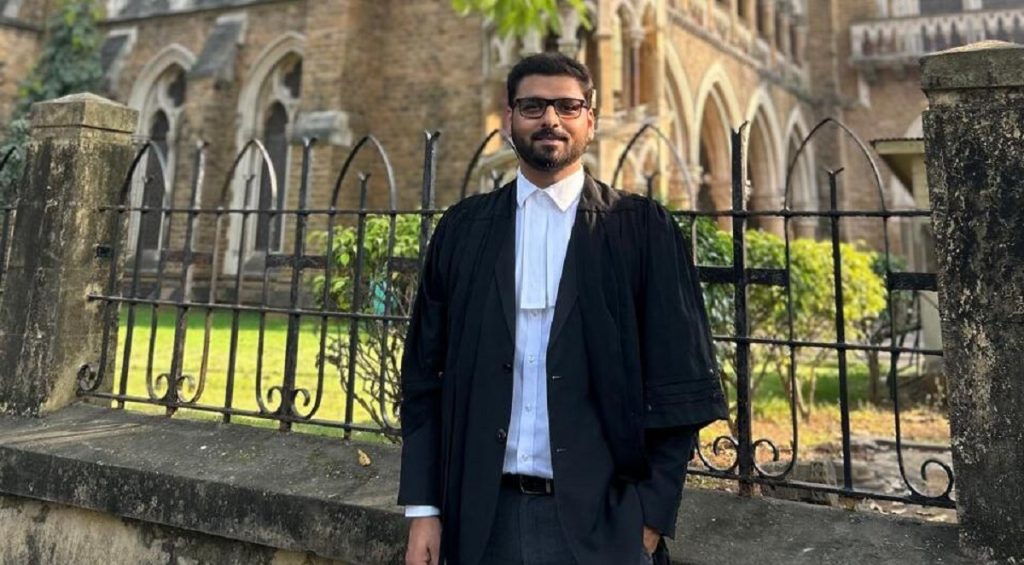

Harsh Trivedi, Founder and Managing Partner at Trivedi & Parashar, views law not as a planned career but as a calling shaped by purpose, service and experiences. Growing up in an Army household, studying commerce at SRCC, witnessing the Nirbhaya proceedings, and working with the Government of India, each phase shaped his journey as lawyer through conviction, mentorship and resilience. This conversation traces his formative influences, the building of a full-service law firm and key lessons learned along the way, and the advice he believes every aspiring lawyer should carry forward.
This interview has been published by Anshi Mudgal and The SuperLawyer Team
What initially drew you to pursue law, coming from a commerce background, was there a personal moment that guided you?
Coming from an Army background, the idea of service was never taught to me, it was lived around me every single day. I grew up watching my family place duty above comfort, integrity above convenience, and courage above certainty. Very early in life, it became clear to me that money would always be a consequence, never the objective. What mattered was whether I was contributing something meaningful to the society and country that shaped me. Ironically, my journey didn’t begin with clarity about what I wanted to do. In fact, it began with clarity about what I did not want to become, someone who drifted through life without purpose. After studying at Shri Ram College of Commerce, the conventional trajectory pointed towards business or finance. But I felt an unmistakable disconnect. I didn’t want a career that revolved purely around transactions. I wanted a life built around impact.
Law entered my life almost incidentally. I chose it initially as a stepping stone for the Civil Services Exam because I aspired to join the Indian Police Service. I thought wearing the IPS uniform would be the most direct way to serve my country. But destiny has an interesting way of revealing your path. In my first year of law school, I had the chance to observe the Nirbhaya case proceedings. That experience shook me in a way I couldn’t articulate then. I saw a courtroom become a place where the collective pain of a nation sought answers, where truth was not assumed but fought for, and where young lawyers stood shoulder to shoulder with giants of the profession. Watching that humanity, courage, and logic converge under the scrutiny of the law changed something fundamental in me.

It struck me that the legal profession is the only one where hierarchy, lineage, and protocol are powerless in the face of preparation. If you are well-read, well-reasoned, and principled, your age, background, and connections do not matter. A 23-year-old counsel can stand before the court and oppose a 90-year-old titan and both are heard with equal seriousness. That purity, that equality of voice, moved me. It made me realise that this profession honours conviction above all else.
But perhaps my earliest encounter with the law happened long before my first courtroom visit. It happened at home. I had grown up seeing ordinary people struggle with things that should not break a person, asserting their rights, navigating bureaucracy, facing arbitrary decisions, or simply trying to be treated with dignity. I learnt that helplessness often doesn’t come from the absence of strength, but from the absence of knowledge. And I remember silently thinking, “If I ever get the tools to fix this, I will.”
That thought, simple, stubborn, and deeply internal, is what eventually pulled me towards the law. Not ambition, Not an opportunity, Not a five-year plan. Just the quiet belief that if I could stand between a person and their most vulnerable moment, I should. And somewhere along that journey, without fanfare or dramatic realisation, I understood:
Law was not my career choice. It was my calling. A calling shaped by service, strengthened by exposure, and anchored in the conviction that clarity, fairness, and dignity must never be luxuries, they must be rights.
What early experiences with law firms and Senior Advocates shaped your professional foundation?
My early years in the profession shaped my character more than my caseload. My first mentor was Ms Ruby Singh Ahuja, Senior Partner at Karanjawala & Co. Working with her taught me to prepare, to be fearless, and to maintain the discipline required to stand firmly on facts and law. She showed me what it means to lead with clarity and conviction, and she built in me the confidence to argue with substance rather than volume.
I later worked with Mr. Akhil Sibal, Senior Advocate. From him, I learnt patience, calm thinking, and the ability to explain the most complex matter in two simple sentences. If you cannot simplify an issue, you have not understood it. That lesson changed the way I read, analyse, and argue. He also reminded me that humility is not weakness. It is a strength.
Outside the mentorship of great seniors, the real foundation came from the unglamorous work. I was the junior who carried files, waited outside courtrooms, and stood in queues for certified copies. Those tasks taught me attention to detail, respect for the process, and the importance of preparation.
Two early lessons stayed with me. Precision is compassion, and a careless line in a draft can harm a client quietly yet permanently. Humility builds mastery. The more I learnt, the more I realised how much more there was to learn. Before I learnt to speak like a lawyer, I learnt to think and behave like one. That grounding has stayed with me throughout my journey.
How did your dual-specialisation Master’s degree from Leiden University contribute to your pursuit of excellence?
I have always felt that a true university education should expand one’s mind, challenge assumptions, and encourage us to imagine ideas that can outlive us. But many of us grow up inside an Indian education system where learning is overshadowed by the fear of not getting placed. Instead of questioning the world, students end up questioning their own worth. That quiet pressure betrays the very purpose of education.
Leiden University freed me from that limitation. My Master’s programme was not just an academic pursuit; it was a shift in consciousness. Leiden did not instruct me on what to think. It invited me to reflect on how to think. I was surrounded by scholars, diplomats, policy thinkers and students from more than forty countries. Every conversation felt like a window into another worldview. We spoke about geopolitics and technology, human rights and cybersecurity, data governance and public policy. Learning became expansive, alive, almost limitless.
Two realisations changed me. I began to see the law not as something trapped within national borders, but as a global language that connects societies far beyond their political identities. And I understood that knowledge is not an ornament or entitlement. It is responsibility. You are expected to think deeper, act wiser and engage with the world with greater clarity.
My time at Leiden also taught me something even more subtle and profound. Beneath the surface differences of statutes, procedures and legal traditions, the law is essentially a shared human instinct across jurisdictions. The pursuit of justice, the instinct to protect rights and the logic of fairness are remarkably universal. That insight reshaped the way I approach litigation,
governance and policy. It made me look at legal problems not through the narrow lens of a single system, but through the broader lens of how humanity negotiates fairness.
Leiden gave me the courage to step away from predictable paths and create a career that blends litigation, technology, public policy and international thinking. It widened my world and deepened my purpose. More than anything, it reminded me that education is meant to liberate, not limit. It is meant to ignite ambition, not suppress it. It is meant to make you larger than your fears, not smaller than your potential.
Every lawyer has a phase that transforms them. What was yours?
After Leiden, I returned to India with a renewed sense of purpose. I chose not to stay abroad, not to chase comfort or certainty, but to serve. I joined the core team of Ms Nirmala Sitharaman as her Assistant Private Secretary, first in the Ministry of Defence and later in Finance and the Ministry of Corporate Affairs. Those years exposed me to the highest levels of governance and the weight of national responsibility. I served during moments when the country itself felt on edge, including the days surrounding the Pulwama attack. It was a period that taught me how decisions made in rooms with no cameras can affect the lives of millions outside.
But it also clarified something within me. Even while working at the heart of government, I realised that the place where my voice had the most authenticity was the courtroom. Policy shapes nations, but advocacy shapes people. And I wanted to be close to people.
Leaving the government and returning to law felt like stepping into my own skin again. Yet, the most transformative moment came when I walked away from the safety of employment and decided to build my own law firm from the ground up. Starting from scratch demands a different kind of courage. There is no safety net. There is no fallback. You wake up knowing that client trust, quality of work, growth, and survival depend entirely on your discipline and integrity. In those early months, I argued my own matters, drafted through the night, managed accounts, built operational systems, met clients, and made hard decisions in silence. There were no shortcuts. Only persistence. Those years taught me a resilience that no courtroom ever could.
That phase transformed me from a lawyer into a leader. I became responsible not only for my own cases but for the careers, families and futures of the people who believed in my vision. Building a firm is not about opening an office. It is about creating a space where ambition, ethics and excellence coexist. It is about building something that stands even when you are not in the room.
That decision to return to India, to serve in government, and then to step away and build something of my own has been the most defining chapter of my life. It taught me that purpose is not found. It is forged.
What has been one of the most challenging cases of your career, and how did you navigate it?
Some of the most challenging matters in my career were not difficult because of their legal complexity, but because of their human consequences.
I once handled a high-stakes commercial dispute where a family’s entire financial future hinged on a single injunction order. Beneath the pleadings were decades of savings, sacrifices and anxieties that never appear in the record. I prepared obsessively, anticipated every counter argument, built an airtight factual matrix and stayed emotionally grounded. When the court granted relief, the clients did not talk about “winning”. They said they could finally “breathe again”. That moment reminded me why our work matters.
Two other examples have stayed with me with equal force.
The first was a property matter involving an elderly couple who had invested their life savings into a home that was wrongfully denied to them. What seemed like a technical dispute was, for them, the difference between security and uncertainty in the final years of their lives. Every hearing carried the weight of their trust and their timeline. When we finally secured possession for them, the relief on their faces meant more than any citation.
Another was a corporate recovery case involving a small manufacturer on the brink of shutting down because of a massive unpaid commercial debt. For the company, the litigation was not about numbers. It was about the jobs of the 80 workers who relied on them, the continuity of a family business and the preservation of dignity. When we secured recovery through a combination of strategy, negotiation and structured compliance, it saved not just a company but an entire ecosystem of people behind it.
These cases taught me a simple truth.
The law is technical.
But justice is deeply personal.
It is our responsibility as lawyers to stand at that intersection, translate human pain into legal arguments and ensure that relief on paper becomes relief in real life.
What has been your constant source of guidance and motivation throughout your journey?
My strongest source of guidance has been Mr. Vivek Sibal, Senior Advocate. He has been a steady influence in my life from my internship days till today. His clarity, balance and sense of proportion have shaped the way I think, prepare and conduct myself as a lawyer. Whenever I have been at a crossroads, his advice has always reminded me to stay grounded and focused on the essentials.
My biggest motivation, however, comes from my family. They have backed every risk, every long night and every difficult phase without questioning the path I chose. My wife has been an anchor through the most demanding years of building the firm. Her patience, emotional strength and belief in my work gave me the space to grow.
I also draw strength from my business partner, Mr. Shantanu Parashar. We started with nothing except conviction. For almost six years now, we have built the firm brick by brick, sharing both the responsibility and the weight of the journey. His trust and partnership inspire me to keep raising the bar.
What truly keeps me going is the simple belief that if I can be useful every single day, whether to a client, a colleague or my team, that is enough. Consistency, honesty and purpose are the only things I try to show up with, no matter how chaotic the world outside may be.
What advice would you give students/new graduates entering corporate and commercial law?
The first thing I tell young lawyers is this: stop seeing yourself as a victim just because you are a first-generation lawyer. Your identity card is enough to enter any courtroom in this country. Walk in, observe arguments, find a counsel whose work inspires you, and simply ask them for an internship. Courage opens more doors than connections ever will.
Your first three bosses will shape your professional DNA. Choose them carefully. They will either make you fall in love with the law or push you away from advocacy entirely. Look for mentors who teach, correct, and forgive. And be humble. You cannot learn if you pretend to know.
In the initial years, you do not have expertise to offer, but you do have two things: consistency and integrity. Show up every day with sincerity. Do not lie, do not pretend to work, and do not cut corners. A good senior values honesty more than perfection because he knows you will make mistakes as you grow.
Take pride in your gown. Carry yourself with respect. This profession demands dignity both inside and outside the courtroom.
Three principles will stay with you throughout your career:
- Do not chase glamour. Chase mastery. People may remember good lawyers, but they respect the ones who are irreplaceable.
- Build strong foundational skills. Drafting, research, reading statutes, breaking down contracts, and understanding commercial logic are non-negotiable.
- Be patient with your journey. Your first job is not your destiny. Your twenties are for absorbing, observing, failing, and learning. The habits you build now will decide the lawyer you become later.
The legal profession rewards depth, discipline and character far more than loud ambition. Show up. Work hard. Stay humble. And the profession will open itself to you.
How can law students navigate internships and stay updated on legal developments?
Intern smart, not wide. Choose internships that teach you skills, not just give you an access card. Work with people who will critique you. It is uncomfortable, but it builds you faster than anything else.
On staying updated: I recommend:
- LiveLaw & Bar & Bench (daily legal updates)
- SCC Online Blog (analysis of judgments)
- PRS Legislative Research (policy + Bills)
- RBI & SEBI circulars (for corporate/commercial law)
- Podcasts like The Seen and the Unseen and War on the Rocks (for broader thinking) And most importantly: Read one judgment a week. It will change your brain.
Get in touch with Harsh Trivedi –



No comment provided.
Excellent 👍👍
Very Good