
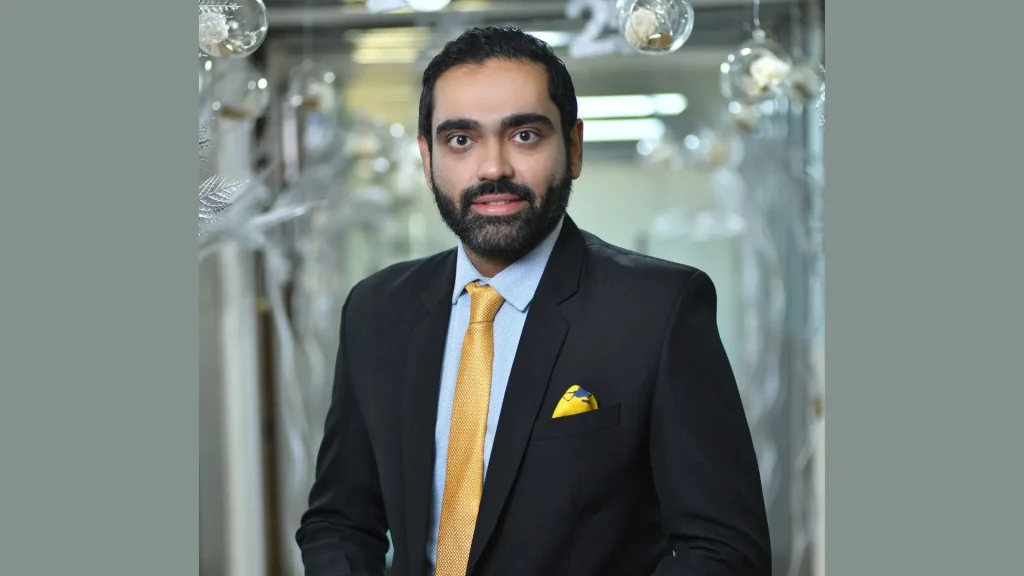

From early courtroom experiences to handling complex insolvency and white-collar matters, Dikshat Mehra, Associate Partner at Rajani Associates, reflects on his journey in commercial litigation and dispute resolution. In this interview, he speaks about the early challenges of litigation, the role of mentorship, navigating high pressure insolvency matters, and the discipline required for courtroom practice. He also shares his thoughts for law students and young lawyers looking to build a long-term career in litigation and advocacy.
This interview has been published by Anshi Mudgal and The SuperLawyer Team
Looking back at your days at KC Law College, what first drew you toward the courtroom and the world of disputes?
I always wanted a career, where I could make a difference. After completing my second year college, I applied to a Pune Law College with great enthusiasm, but due to some technical glitch I could not get into the College. I was very disheartened and quickly concluded that Law was not for me.

I then did my bachelor’s in management studies and simultaneously started working in my own family business of Textiles. But sometime in my second year of Management, I still felt that I had inclination towards Law and hence made another attempt for the same.
With the unwavering support and encouragement of my family, I was able to discover and embrace my true passion and strengths. Their guidance played a pivotal role in shaping my journey into the legal field. As a first-generation lawyer, this path was both challenging and rewarding and once it began, there was no turning back. I am deeply humbled and profoundly grateful to God, my Guru, my wife, and my seniors.
At KC Law College, I did not immediately know that litigation would be my path, but I was always drawn to the idea of law in action. Sitting in courtrooms during my early internships, I remember being struck by the energy of the fact that every word mattered, every pause mattered.
In the early years of practice, what were the moments that tested your resolve to continue in this field?
The early years were honestly overwhelming. There were days of long hours with very little visibility, matters where despite your best effort the outcome would not go your way, and moments where you questioned whether the grind would eventually pay off. What kept me going was a quiet belief that every day in court whether you were arguing or just observing was adding something to your foundation. Looking back, those difficult phases were the most formative.
Was there a mentor or a case that reshaped the way you understood law and advocacy?
I have been fortunate to learn under seniors who emphasized clarity over theatrics. One of the biggest lessons I picked up early on was that judges value precision and honesty far more than over argument. There was a matter where we won not because we said the most, but because we said exactly what was necessary and at the right time. That stayed with me. It changed how I prepare and how I argue even today.
Among the high-stakes insolvency matters you have handled, which one became the turning point of your career?
There was a particular insolvency matter where everything felt high pressure tight timelines, multiple parties, and significant financial implications. It was one of the first times I felt the full weight of responsibility. Navigating that matter required not just legal understanding, but also a sense of commercial practicality. When it concluded successfully, it gave me a certain confidence that I could handle complexity and pressure at that level.
While dealing with agencies such as the CBI, EOW and ED, what inner discipline helped you remain steady under pressure?
These matters can be intense, not just legally but emotionally for the client as well. I have learned to anchor myself in preparation. When you know your facts thoroughly and understand the law clearly, it creates a kind of internal stability. The other aspect is staying composed, never reacting impulsively, always thinking a step ahead. Over time, you develop a certain calmness even in high-pressure situations.
Behind the recognitions you have received, what unseen sacrifices shaped your journey?
There have been many missed family occasions, unpredictable schedules, and long stretches where work takes precedence over everything else. Litigation does not really switch off. But I have come to accept that as part of the journey. The support of family, my wife now has been crucial, they have been the constant through all the unpredictability.
After years in commercial litigation and white-collar practice, how do you see the next phase of your professional growth?
At this stage, I am looking at growth more consciously. It is not just about taking on more matters, but about taking on the right matters that challenge you and allow you to evolve. I am also increasingly invested in mentoring younger lawyers and building a team that shares the same work ethic and approach to litigation. That, to me, feels like the natural next step.
What guidance would you give to law students who aspire to build a career like yours?
Be patient with the process. Litigation does not offer instant results, but it builds you in ways few other professions can. Focus on learning, watch court proceedings, read extensively, and do not hesitate to start from the ground up. Also, develop resilience. There will be setbacks, but if you stay consistent, the profession eventually rewards you.
Get in touch with Dikshat Mehra –