
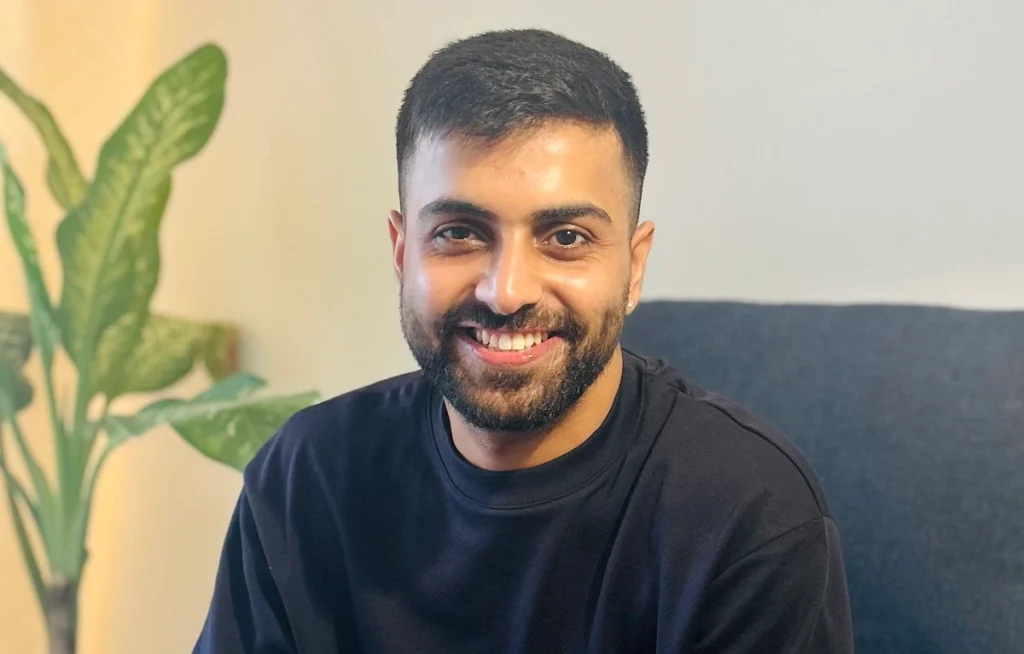

Careers in litigation are often shaped as much by circumstances as by choice. Dhruv Chawla, Advocate practising before the Supreme Court of India and the High Court of Delhi, shares how an early personal experience redirected him from an entirely different dream turning uncertainty into conviction. From discovering the intellectual thrill of courtroom to gaining early independence and responsibility, this interview traces how the foundations of litigation are built through experience, exposure and evolving motivation.
This interview has been published by Anshi Mudgal and The SuperLawyer Team
What inspired you to choose litigation as a career, and how did your early years shape your journey?
My entry into litigation and law itself was entirely unplanned. I had aspired to become a fighter pilot, but being conferenced out of the AFSB at Dehradun was a deeply disappointing moment and marked a significant personal setback. Law began as a backup option. However, in hindsight, it turned out to be one of the greatest blessings in disguise. What I did not realise then was that the legal profession would allow me to channel the same sense of purpose, discipline, and desire to contribute meaningfully to the nation, albeit in a very different way.

If I look deeper, what truly drew me to litigation was the aspiration to be in a position of relevance and responsibility, where one sees issues closely, understands systemic realities, and can influence outcomes, whether directly through judgments or indirectly through policy shaping litigation. That sense of being a stakeholder in the country’s institutional growth strongly anchored my decision to pursue the profession more seriously.
Interestingly, inspiration in litigation is not static; it evolves with each phase of one’s career. The initial motivation was driven by idealism. In my early years, it transformed into the sheer thrill of arguing in court, the nerves, the unpredictability of proceedings, and the intellectual adrenaline of live advocacy. After moving to Delhi in 2018, I was fortunate to join a chamber that entrusted juniors with substantial responsibility and autonomy. Being encouraged to handle matters independently, build cases from the ground up, and see them through instilled early confidence. This exposure played a pivotal role in shaping my independence as a litigator and gave me the conviction to begin representing clients on my own at a relatively early stage.
What were the biggest learning experiences you had while handling complex matters at higher judicial forums in your early practice?
One of my core strengths has always been the ability to absorb and internalise skills from the people I observe and engage with, both directly and indirectly. In the initial years of my practice, opportunities to independently argue complex matters before higher judicial forums were understandably limited. However, I made the most of that phase by keenly observing senior advocates and seasoned practitioners, how they structured arguments, read the Bench, built narratives, and manoeuvred through difficult moments during hearings.
Closely observing these stalwarts was a learning experience in itself. Often, the real insight lay between the lines, understanding strategic pauses, calibrated concessions, or tactical shifts that helped them navigate seemingly unfavourable situations. One of the most valuable lessons I learnt during this phase came from one of my seniors and mentors, Mr. Sanjeev Singh, who emphasised the importance of always having a well thought out solution in mind, one that not only protects the client’s interest but, where possible, also accommodates or dilutes disputed points in a manner favourable to the opposing side. This approach requires an intense and nuanced understanding of the law, coupled with a deep reading of the factual matrix, and it significantly enhances credibility before the Court.
I consciously studied these nuances and gradually adapted such skill sets, adding my own perspective and style before applying them in my own matters. Fairly early in my career, I also gained clarity about what it takes to succeed at higher forums, rigorous preparation, strategic thinking, courtroom discipline, and consistency. I realised that I possessed both the temperament and the drive required for this profession. With sustained dedication and hard work, made easier by the fact that I genuinely enjoy litigation, I was confident that I could build a meaningful practice and hold my own on larger platforms.
What was the single defining moment in your career that transformed your perspective on litigation and set you on a path of sustained growth and success?
It is difficult to point to a single defining moment in a professional journey that has spanned over seven years and has been anything but eventful. However, since ethics and discipline have always been values I hold deeply, one particular incident stands out and fundamentally shaped my perspective on litigation and professional growth.
While appearing as counsel for the Municipal Corporation of Delhi, I was once directly offered a bribe to merely delay the filing of an affidavit, so as to give undue leverage to one of the parties involved. Although I was not entirely unaware that such practices exist in isolated corners of the system, being confronted with it so directly was both unexpected and unsettling.
At that moment, the choice before me was stark and unmistakable. One path promised immediate monetary gain but came at the cost of credibility, self respect, and long term integrity. The other path demanded firmness and restraint but guaranteed inner strength, professional respect, and sustainable growth. The clarity of where each road would lead made the decision a straightforward one.
That incident crystallised what I wanted to be known for as a lawyer, someone approached for depth of legal understanding, sound judgment, and principled advocacy, rather than someone whose doors open with a bag of cash. It also reinforced my belief that while litigation certainly requires street smart thinking and strategic navigation, one must have absolute clarity on the larger ethical framework within which those strategies operate.
In this context, my engagement with the Bhagavad Gita and its various commentaries has had a profound influence on me. It offered perspective on Dharma, particularly in a profession where one is frequently confronted with morally complex choices, and helped me anchor my practice in righteousness, clarity, and long term vision rather than short term gain.
What marked the turning point that led to the establishment and growth of Dhruv Chawla Law Offices?
The establishment of Dhruv Chawla Law Offices was not the result of a single defining moment, but rather a gradual transition shaped by experience, responsibility, and growing confidence. From an early stage in my career, I had begun taking up matters independently, even while continuing to assist and learn from my seniors. Over time, the volume and nature of my independent work steadily increased, allowing me to develop both professional judgment and client facing responsibility alongside chamber practice.
This parallel journey of learning and independent advocacy continued organically, and by mid 2022, I felt prepared to take the decisive step of setting up my own practice full time. The decision was rooted not in haste, but in a clear assessment of readiness, both in terms of legal competence and the ability to manage matters end to end with accountability.
Through this journey, one belief has become central to my approach, particularly for young litigators. I strongly encourage budding advocates to believe in themselves and begin taking up matters independently as early as possible. There is no teacher more effective than direct exposure to responsibility, being in the courtroom, making real time decisions, and standing fully accountable to the client. At the same time, independence must be tempered with humility. Seeking guidance, taking second opinions, and remaining open to learning are essential to ensuring the best outcomes for clients. Confidence is vital in litigation, but it must never cross into rashness.
Litigation often demands resilience. Can you share a setback or challenging phase that transformed your approach to your practice?
If you were to speak to my seniors, I suspect they would have no shortage of stories about the setbacks and lessons along the way and you might have to stop them midway. On a lighter note, litigation has a way of humbling you regularly, and I have certainly had my fair share of such moments.
Jokes aside, I can say without hesitation that I have been fortunate to work under exceptional seniors throughout my journey, each phase contributing significantly to the way I practise today. I began at SKV Law Offices, where I was exposed to bulk litigation and learned the importance of case management, efficiency, and handling volume with consistency. I then had the opportunity to work under Mr. Tushar Singh, where meticulous drafting, precision, and attention to factual detail were rigorously instilled in me. Subsequently, at Sanjeev Singh Associates under Mr. Sanjeev Singh, I developed a far more refined and analytical approach to the law, with a strong emphasis on depth of legal understanding and intensive research as the backbone of effective advocacy.
Each transition came with its own challenges and setbacks, the process of refinement is rarely smooth. However, I credit my seniors for recognising potential early on and investing time and effort in grooming it, which played a crucial role in shaping me into a more disciplined and thoughtful litigator.
Like most independent professional journeys, challenges never truly disappear. Financial uncertainty, inconsistent workflow, and even the absence of a proper workspace were realities at different stages. What helped me navigate these phases was sustained self belief and the confidence to persevere through uncertainty. I firmly believe that an absence of challenges often signals stagnation rather than success. While I do not seek difficulties, I have learned to view them as opportunities for growth.
While representing hospitals and healthcare institutions, what sector specific legal and regulatory challenges do you encounter most frequently?
Representing hospitals and healthcare institutions presents a unique set of legal and regulatory challenges, largely because disputes in this sector often arise at the intersection of law, medicine, and human emotion. One of the most persistent challenges is the timely adjudication of disputes, particularly those relating to allegations of medical negligence. A significant number of such matters fall within the jurisdiction of consumer fora, and it is not uncommon for these cases to remain pending for years, sometimes even decades. The prolonged timelines place an immense burden on all stakeholders, doctors who are already engaged in demanding professions, and patients or their families who are navigating legal proceedings in the aftermath of trauma or loss.
Another recurring challenge lies in the nature of medical negligence allegations themselves. While some complaints are well founded and deserve strict legal scrutiny, a large number arise from grief and emotional devastation following the loss of a loved one. In such cases, doctors often become the immediate focal point of blame. These matters therefore require not only legal precision but also a nuanced understanding of medical protocols and human psychology.
From a regulatory perspective, the healthcare sector is subject to overlapping compliance frameworks, evolving standards of care, and heightened judicial scrutiny. Successfully navigating these matters requires a careful balance between protecting medical professionals from unfounded allegations and ensuring accountability where negligence is genuine. The challenge lies not merely in legal defence, but in preserving professional integrity, patient rights, and systemic trust.
Public Interest Litigations and pro bono work form a significant part of your journey. What draws you towards social causes and policy impacting litigation?
Public Interest Litigations and pro bono work lie at the very core of my practice and, in many ways, define my approach to advocacy. I strongly believe in advocacy for a cause, and this philosophy consistently reflects in the matters I choose to pursue. For me, the law is not merely a dispute resolution mechanism but a powerful instrument for systemic correction and social accountability.
In 2021, I came across an illegally installed advertisement hoarding in Delhi promoting an alcohol brand, despite such advertisements being expressly prohibited by law. Acting purely on principle, I filed a Public Interest Litigation titled Dhruv Chawla v. GNCTD & Ors. [W.P.(C) 5124/2021]. With clear legal research, a well defined cause of action, and focused reliefs, the illegal hoarding was removed. I vividly remember standing in front of the removed structure and realising the transformative potential of the legal profession.
That experience became the foundation for several subsequent PILs addressing larger systemic issues such as groundwater depletion in Punjab, air quality degradation in Delhi, and other matters impacting public health and environmental governance. These interventions reaffirmed my belief that even individual legal action, when pursued with conviction and preparation, can bring about tangible change.
Looking ahead, how do you see your role evolving as an advocate in shaping jurisprudence, public policy, and access to justice in India, and what advice would you offer to the younger generation?
Looking ahead, I believe that with the right intention and a stable mindset, an advocate can play a meaningful role in shaping jurisprudence and public policy. Practices such as meditation have helped me cultivate clarity, balance, and perspective, qualities essential for engaging with complex legal and policy issues. I strongly believe that effective law making requires a fine balance between technical precision and practical wisdom, and I strive to position myself at that midpoint.
As my journey evolves, and with a growing understanding of institutional functioning and governance, I would like to contribute more actively to policy formulation and nation building. With a natural inclination towards public affairs, I see my role gradually expanding beyond individual disputes to engaging with issues that have long term structural impact.
I also believe that India’s civilisational knowledge systems offer valuable insights even today. Many contemporary challenges such as environmental degradation, ecological imbalance, ethical governance, and social inequality find thoughtful guidance in our ancient texts. Concepts of Dharma, Raj Dharma, and Sarva Bhuta Hita emphasise governance rooted in responsibility, harmony with nature, and collective welfare. Thoughtfully integrating these principles into modern policy making can create sustainable models with global relevance.
To the younger generation, my advice is simple. Do not be afraid to take calculated risks. Keep learning relentlessly and respect knowledge from every source. Place yourself in your client’s position and strive to be the kind of lawyer you would want representing you. Integrity, empathy, and preparation will always outlast shortcuts. The profession is demanding, but for those who commit sincerely, it is deeply rewarding.
Get in touch with Dhruv Chawla –



Wonderfully structured and very insightful